


Page 455 - The Book of Caterpillars: A Life-Size Guide to Six Hundred Species From Around the World
P. 455
MOTH CATERPILLARS

                      FAMILY  Sphingidae
                  DISTRIBUTION  Northern Europe, Siberia, and eastern Russia into
                           northwest China
                     HABITAT  Wet woodlands, especially near rivers and lakes
                  HOST PLANTS  Aspen (Populus tremula) and willow (Salix spp.)


                      NOTE  Plump, green caterpillar that is di cult to spot among leaves
             CONSERVATION STATUS  Not evaluated, but not threatened


                                                                                   ADULT WINGSPAN
                                                                                  2
   –3⅞ in (71–98 mm)
                                                                                  CATERPILLAR LENGTH
                                                                                  2    –3⅛ in (65–80 mm)
            LAOTHOE AMURENSIS
            ASPEN HAWKMOTH                                                                       453

            (STAUDINGER, 1892)


            Aspen Hawkmoth caterpillars emerge from glossy, green-yellow
            eggs laid on the underside of leaves of the host plant. The female
            hawkmoth lays around 100 of the dorsoventrally  attened eggs,

            which hatch up to 12 days later. The young caterpillars are pale
            green with faint, yellow markings; oblique stripes appear at later
            instars. The larvae feed by night on the leaves of their host plants,
            consuming all of the leaf except the midrib. During the day, they
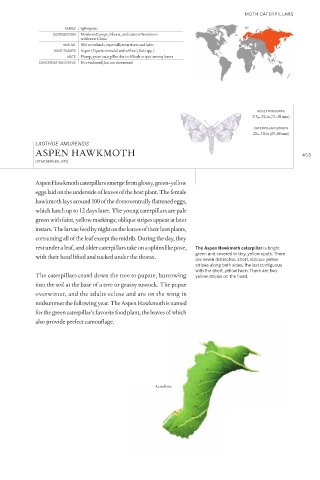
            rest under a leaf, and older caterpillars take on a sphinxlike pose,   The Aspen Hawkmoth caterpillar is bright
            with their head lifted and tucked under the thorax.   green and covered in tiny, yellow spots. There
                                                               are seven distinctive, short, oblique yellow
                                                               stripes along both sides, the last contiguous
                                                               with the short, yellow horn. There are two
            The caterpillars crawl down the tree to pupate, burrowing   yellow stripes on the head.
            into the soil at the base of a tree or grassy tussock. The pupae
            overwinter, and the adults eclose and are on the wing in
            midsummer the following year. The Aspen Hawkmoth is named
            for the green caterpillar’s favorite food plant, the leaves of which
            also provide perfect camou age.


                                                   Actual size

