


Page 458 - The Book of Caterpillars: A Life-Size Guide to Six Hundred Species From Around the World
P. 458
MOTH CATERPILLARS

                                                     FAMILY  Sphingidae
                                                 DISTRIBUTION  Southern Asia, from eastern India east to southern China,
                                                          southern Japan, and Southeast Asia
                                                    HABITAT  Parks, gardens, mangroves, and wetlands
                                                  HOST PLANTS  Skunkvine (Paederia foetida) and Noni (Morinda citrifolia)

                                                      NOTE  Caterpillar that metamorphoses into a day- ying,
                                                          hummingbird-like hawkmoth
                                             CONSERVATION STATUS  Not evaluated, but usually common


            ADULT WINGSPAN
          1  ⁄  –2 ⁄   in (46–56 mm)
           CATERPILLAR LENGTH
           2 ⁄  –2 ⁄   in (53–58 mm)                                    MACROGLOSSUM SITIENE
                                                                   CRISP-BANDED
                                              HUMMINGBIRD HAWKMOTH
    456
                                                                                    (WALKER, 1856)


                                            Crisp-banded Hummingbird Hawkmoth caterpillars hatch from
                                            spherical, glossy, green eggs, laid singly on terminal leaves of
                                            the host plant. First instars are green and well camou aged,

                                            spending much time resting along the midvein on the undersides
                                            of leaves. The caterpillars develop rapidly and have a voracious
                                            appetite, feeding primarily on host plant leaves. When nearing
                                            pupation, they turn from green to purplish brown and begin
                                            to wander, looking for a pupation site, where they weave
                                            a few leaves together to create a shelter. Within 48 hours,
                                            the caterpillars pupate.


                                            Pupation shelters may be in the lower leaves of a growing plant
                                            or among leaf litter on the ground. The pupal period is short,
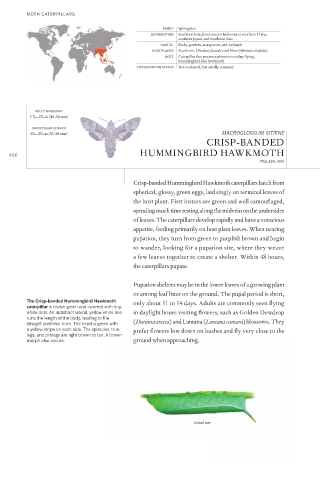
          The Crisp-banded Hummingbird Hawkmoth   only about 11 to 14 days. Adults are commonly seen flying
          caterpillar is bluish green and covered with tiny,

          white dots. An indistinct lateral, yellow white line   in daylight hours visiting  owers, such as Golden Dewdrop
          runs the length of the body, leading to the
          straight posterior horn. The head is green with   (Duranta erecta) and Lantana (Lantana camara) blossoms. They
          a yellow stripe on each side. The spiracles, true   prefer flowers low down on bushes and fly very close to the
          legs, and prolegs are light brown to tan. A brown
          morph also occurs.                ground when approaching.


                                                               Actual size

