


Page 65 - (DK) Ocean - The Definitive Visual Guide
P. 65
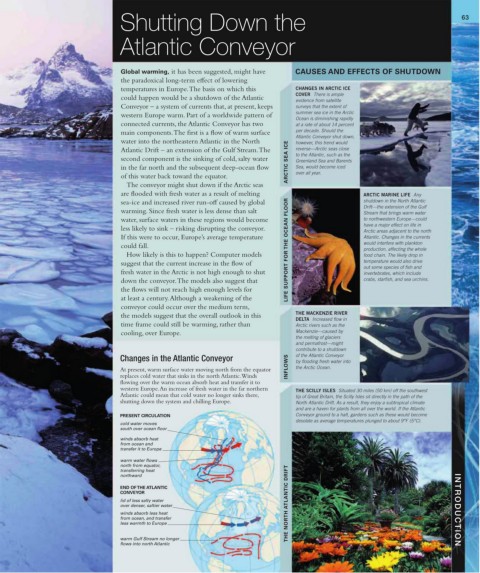
Shutting Down the                                                                                     63


                                     Atlantic Conveyor


                                     Global warming, it has been suggested, might have
                                                                                         CAUSES AND EFFECTS OF SHUTDOWN
                                     the paradoxical long-term effect of lowering
                                     temperatures in Europe. The basis on which this     CHANGES IN ARCTIC ICE
                                                                                         COVER  There is ample
                                     could happen would be a shutdown of the Atlantic
                                                                                         evidence from satellite
                                     Conveyor – a system of currents that, at present, keeps   surveys that the extent of
                                                                                         summer sea ice in the Arctic
                                     western Europe warm. Part of a worldwide pattern of
                                                                                         Ocean is diminishing rapidly
                                     connected currents, the Atlantic Conveyor has two   at a rate of about 14 percent
                                     main components. The first is a flow of warm surface   per decade. Should the
                                                                                         Atlantic Conveyor shut down,
                                     water into the northeastern Atlantic in the North   however, this trend would
                                     Atlantic Drift – an extension of the Gulf Stream. The   reverse—Arctic seas close
                                                                                         to the Atlantic, such as the
                                     second component is the sinking of cold, salty water   ARCTIC SEA ICE  Greenland Sea and Barents
                                     in the far north and the subsequent deep-ocean flow   Sea, would become iced
                                     of this water back toward the equator.              over all year.
                                       The conveyor might shut down if the Arctic seas
                                     are flooded with fresh water as a result of melting                     ARCTIC MARINE LIFE  Any
                                     sea-ice and increased river run-off caused by global                    shutdown in the North Atlantic
                                                                                                             Drift—the extension of the Gulf
                                     warming. Since fresh water is less dense than salt                      Stream that brings warm water
                                     water, surface waters in these regions would become                     to northwestern Europe—could
                                     less likely to sink – risking disrupting the conveyor.                  have a major effect on life in
                                                                                                             Arctic areas adjacent to the north
                                     If this were to occur, Europe’s average temperature                     Atlantic. Changes in the currents
                                     could fall.                                       LIFE SUPPORT FOR THE OCEAN FLOOR  would interfere with plankton
                                                                                                             production, affecting the whole
                                       How likely is this to happen? Computer models                         food chain. The likely drop in
                                     suggest that the current increase in the flow of                        temperature would also drive
                                                                                                             out some species of fish and
                                     fresh water in the Arctic is not high enough to shut                    invertebrates, which include
                                     down the conveyor. The models also suggest that                         crabs, starfish, and sea urchins.
                                     the flows will not reach high enough levels for
                                     at least a century. Although a weakening of the
                                     conveyor could occur over the medium term,
                                                                                         THE MACKENZIE RIVER
                                     the models suggest that the overall outlook in this
                                                                                         DELTA  Increased flow in
                                     time frame could still be warming, rather than      Arctic rivers such as the
                                     cooling, over Europe.                               Mackenzie—caused by
                                                                                         the melting of glaciers
                                                                                         and permafrost—might
                                                                                         contribute to a shutdown
                                     Changes in the Atlantic Conveyor                    of the Atlantic Conveyor
                                                                                         by flooding fresh water into
                                     At present, warm surface water moving north from the equator   INFLOWS  the Arctic Ocean.
                                     replaces cold water that sinks in the north Atlantic. Winds
                                     flowing over the warm ocean absorb heat and transfer it to
                                     western Europe. An increase of fresh water in the far northern   THE SCILLY ISLES  Situated 30 miles (50 km) off the southwest
                                     Atlantic could mean that cold water no longer sinks there,   tip of Great Britain, the Scilly Isles sit directly in the path of the
                                     shutting down the system and chilling Europe.       North Atlantic Drift. As a result, they enjoy a subtropical climate
                                                                                         and are a haven for plants from all over the world. If the Atlantic
                                                                                         Conveyor ground to a halt, gardens such as these would become
                                     PRESENT CIRCULATION
                                                                                         desolate as average temperatures plunged to about 9°F (5°C).
                                     cold water moves
                                     south over ocean floor
                                     winds absorb heat
                                     from ocean and
                                     transfer it to Europe
                                     warm water flows
                                     north from equator,
                                                                                       THE NORTH ATLANTIC DRIFT
                                     transferring heat
                                     northward
                                     END OF THE ATLANTIC
                                     CONVEYOR
                                     lid of less salty water
                                     over denser, saltier water
                                     winds absorb less heat                                                                              INTRODUCTION
                                     from ocean, and transfer
                                     less warmth to Europe

                                     warm Gulf Stream no longer
                                     flows into north Atlantic

