


Page 82 - Complete Birds of Britain and Europe (DK - RSPB)
P. 82
BITTERNS AND HERONS
       Order Ciconiiformes    Family Ardeidae        Species Egretta garzetta
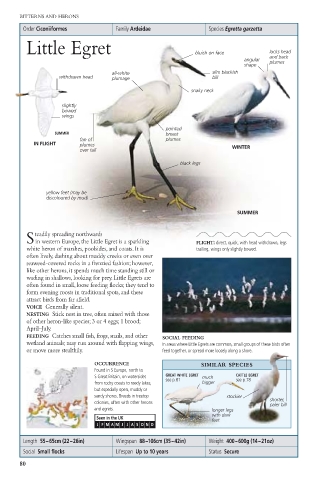
        Little Egret                                                lacks head
                                                  bluish on face
                                                                    and back
                                                              angular
                                                              shape  plumes
                             all-white                slim blackish
                withdrawn head   plumage              bill
                                                 snaky neck
                slightly
                bowed
                wings
                                          pointed
               SUMMER                     breast
                     fan of               plumes
         IN FLIGHT   plumes
                     over tail                             WINTER
                                              black legs


             yellow feet (may be
             discoloured by mud)
                                                            SUMMER

          teadily spreading northwards
        S in western Europe, the Little Egret is a sparkling  FLIGHT: direct, quick, with head withdrawn, legs
        white heron of marshes, poolsides, and coasts. It is  trailing, wings only slightly bowed.
        often lively, dashing about muddy creeks or even over
        seaweed-covered rocks in a frenzied fashion; however,
        like other herons, it spends much time standing still or
        wading in shallows, looking for prey. Little Egrets are
        often found in small, loose feeding flocks; they tend to
        form evening roosts in traditional spots, and these
        attract birds from far afield.
        VOICE Generally silent.
        NESTING Stick nest in tree, often mixed with those
        of other heron-like species; 3 or 4 eggs; 1 brood;
        April–July.
        FEEDING Catches small fish, frogs, snails, and other  SOCIAL FEEDING
        wetland animals; may run around with flapping wings,  In areas where Little Egrets are common, small groups of these birds often
        or move more stealthily.         feed together, or spread more loosely along a shore.
                        OCCURRENCE                 SIMILAR SPECIES
                        Found in S Europe, north to
                        S Great Britain, on watersides   GREAT WHITE EGRET  much  CATTLE EGRET
                                          see p.81
                                                            see p.78
                        from rocky coasts to reedy lakes,  bigger
                        but especially open, muddy or
                        sandy shores. Breeds in treetop  stockier
                        colonies, often with other herons           shorter,
                                                                    paler bill
                        and egrets.                   longer legs
                                                      with dark
                         Seen in the UK
                                                      feet
                         J  F  M  A  M  JJ A S O  N  D
       Length  55–65cm (22–26in)  Wingspan  88–106cm (35–42in)  Weight  400–600g (14–21oz)
       Social  Small flocks   Lifespan  Up to 10 years  Status  Secure
      80

