


Page 434 - Python Data Science Handbook
P. 434
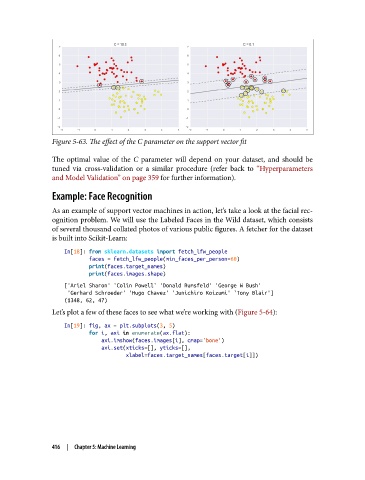
Figure 5-63. The effect of the C parameter on the support vector fit
               The optimal value of the C  parameter will depend on your dataset, and should be
               tuned via cross-validation or a similar procedure (refer back to “Hyperparameters
               and Model Validation” on page 359 for further information).
               Example: Face Recognition

               As an example of support vector machines in action, let’s take a look at the facial rec‐
               ognition problem. We will use the Labeled Faces in the Wild dataset, which consists
               of several thousand collated photos of various public figures. A fetcher for the dataset
               is built into Scikit-Learn:

                   In[18]: from sklearn.datasets import fetch_lfw_people
                           faces = fetch_lfw_people(min_faces_per_person=60)
                           print(faces.target_names)
                           print(faces.images.shape)
                   ['Ariel Sharon' 'Colin Powell' 'Donald Rumsfeld' 'George W Bush'
                    'Gerhard Schroeder' 'Hugo Chavez' 'Junichiro Koizumi' 'Tony Blair']
                   (1348, 62, 47)
               Let’s plot a few of these faces to see what we’re working with (Figure 5-64):

                   In[19]: fig, ax = plt.subplots(3, 5)
                           for i, axi in enumerate(ax.flat):
                               axi.imshow(faces.images[i], cmap='bone')
                               axi.set(xticks=[], yticks=[],
                                       xlabel=faces.target_names[faces.target[i]])


               416  |  Chapter 5: Machine Learning

