


Page 444 - Python Data Science Handbook
P. 444
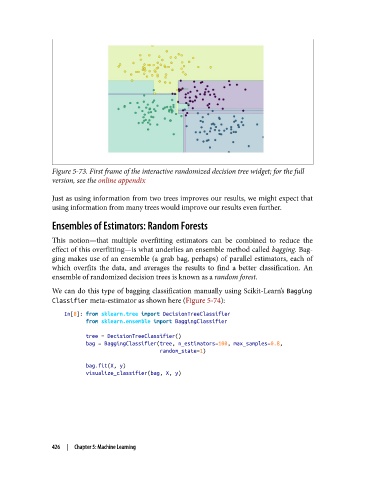
Figure 5-73. First frame of the interactive randomized decision tree widget; for the full
               version, see the online appendix

               Just as using information from two trees improves our results, we might expect that
               using information from many trees would improve our results even further.

               Ensembles of Estimators: Random Forests
               This notion—that multiple overfitting estimators can be combined to reduce the
               effect of this overfitting—is what underlies an ensemble method called bagging. Bag‐
               ging makes use of an ensemble (a grab bag, perhaps) of parallel estimators, each of
               which overfits the data, and averages the results to find a better classification. An
               ensemble of randomized decision trees is known as a random forest.

               We can do this type of bagging classification manually using Scikit-Learn’s Bagging
               Classifier meta-estimator as shown here (Figure 5-74):

                   In[8]: from sklearn.tree import DecisionTreeClassifier
                          from sklearn.ensemble import BaggingClassifier
                          tree = DecisionTreeClassifier()
                          bag = BaggingClassifier(tree, n_estimators=100, max_samples=0.8,
                                                  random_state=1)
                          bag.fit(X, y)
                          visualize_classifier(bag, X, y)


               426  |  Chapter 5: Machine Learning

