


Page 448 - Python Data Science Handbook
P. 448
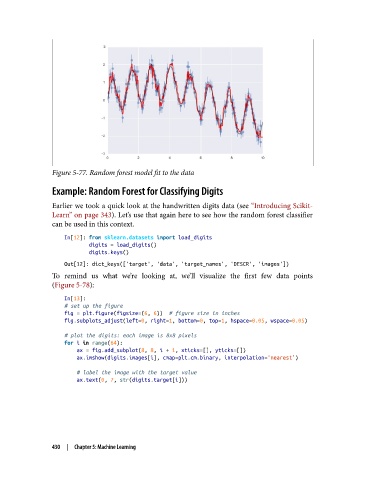
Figure 5-77. Random forest model fit to the data

               Example: Random Forest for Classifying Digits
               Earlier we took a quick look at the handwritten digits data (see “Introducing Scikit-
               Learn” on page 343). Let’s use that again here to see how the random forest classifier
               can be used in this context.
                   In[12]: from sklearn.datasets import load_digits
                           digits = load_digits()
                           digits.keys()
                   Out[12]: dict_keys(['target', 'data', 'target_names', 'DESCR', 'images'])
               To remind us what we’re looking at, we’ll visualize the first few data points
               (Figure 5-78):

                   In[13]:
                   # set up the figure
                   fig = plt.figure(figsize=(6, 6))  # figure size in inches
                   fig.subplots_adjust(left=0, right=1, bottom=0, top=1, hspace=0.05, wspace=0.05)
                   # plot the digits: each image is 8x8 pixels
                   for i in range(64):
                       ax = fig.add_subplot(8, 8, i + 1, xticks=[], yticks=[])
                       ax.imshow(digits.images[i], cmap=plt.cm.binary, interpolation='nearest')

                       # label the image with the target value
                       ax.text(0, 7, str(digits.target[i]))


               430  |  Chapter 5: Machine Learning

