


Page 13 - Spotlight A+ Form 4 & 5 Chemistry KSSM
P. 13
Form
                                                                                                           4
                                                                    Chapter 5 Chemical Bond   Chemistry


                                      +         –
                             Bulb glows  Battery           Negative terminal      Positive terminal
                                                          Positive   +   +   +   +  +
                                                          metal ion
                                                                       +   +   +   +  +
                                                                –                          +
                                      Metal rod                      +   +   +   +  +
                                                          Electron     +   +   +   +  +
                                                                            Metal
                    ©PAN ASIA PUBLICATIONS
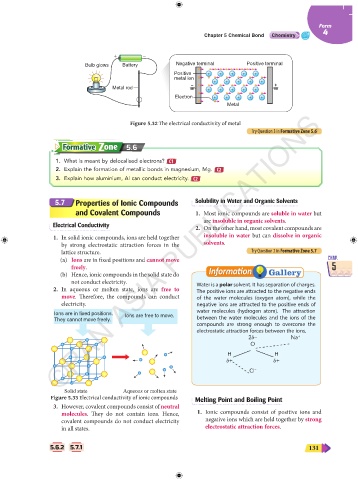
                                            Figure 5.32 The electrical conductivity of metal
                                                                                    Try Question 3 in Formative Zone 5.6

                                          5.6

                   1.  What is meant by delocalised electrons?  C1
                   2.  Explain the formation of metallic bonds in magnesium, Mg.  C2
                   3.  Explain how aluminium, Al can conduct electricity.  C2


                   5.7    Properties of Ionic Compounds          Solubility in Water and Organic Solvents
                          and Covalent Compounds                  1.  Most ionic compounds are soluble in water but
                                                                    are insoluble in organic solvents.
                  Electrical Conductivity                         2.  On the other hand, most covalent compounds are

                   1.  In solid ionic compounds, ions are held together   insoluble in water but can dissolve in organic
                     by strong electrostatic attraction forces in the   solvents.
                     lattice structure.                                            Try Question 2 in Formative Zone 5.7
 CHAP.               (a)  Ions are in fixed positions and cannot move                                        CHAP.
 5                      freely.                                                                               5
                     (b)  Hence, ionic compounds in the solid state do
                        not conduct electricity.                  Water is a polar solvent. It has separation of charges.
                   2.  In aqueous or molten state, ions are  free  to   The positive ions are attracted to the negative ends
                     move. Therefore, the compounds can conduct   of  the  water  molecules  (oxygen  atom), while  the
                     electricity.                                 negative ions are attracted to the positive ends of
                                                                  water  molecules  (hydrogen  atom).    The  attraction
                   Ions are in fixed positions.
                                          Ions are free to move.  between the water molecules and the ions of the
                   They cannot move freely.
                                                                  compounds are strong enough  to overcome the
                                                                  electrostatic attraction forces between the ions.
                                                                                  2δ –          Na +
                                                                                   O
                                                                            H              H
                                                                           δ+              δ+
                                                                                   Cl –


                            Solid state   Aqueous or molten state
                  Figure 5.33 Electrical conductivity of ionic compounds  Melting Point and Boiling Point
                   3.  However, covalent compounds consist of neutral
                     molecules. They do not contain ions. Hence,     1.  Ionic compounds consist of positive ions and
                     covalent compounds do not conduct electricity   negative ions which are held together by strong
                     in all states.                                 electrostatic attraction forces.


                 5.6.2 5.7.1                                                                          131

