


Page 103 - The Netter Collection of Medical Illustrations - Integumentary System_ Volume 4 ( PDFDrive )
P. 103
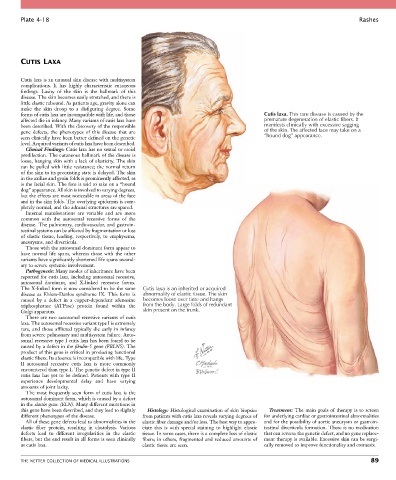
Plate 4-18                                                                                                           Rashes


        CUTIS LAXA

        Cutis laxa is an unusual skin disease with multisystem
        complications.  It  has  highly  characteristic  cutaneous
        findings.  Laxity  of  the  skin  is  the  hallmark  of  this
        disease. The skin becomes easily stretched, and there is
        little elastic rebound. As patients age, gravity alone can
        make  the  skin  droop  to  a  disfiguring  degree.  Some
        forms of cutis laxa are incompatible with life, and those                           Cutis laxa. This rare disease is caused by the
        affected die in infancy. Many variants of cutis laxa have                           premature degeneration of elastic fibers. It
        been described. With the discovery of the responsible                               manifests clinically with excessive sagging
        gene  defects,  the  phenotypes  of  this  disease  that  are                       of the skin. The affected face may take on a
        seen clinically have been better defined on the genetic                             “hound dog” appearance.
        level. Acquired variants of cutis laxa have been described.
          Clinical Findings: Cutis laxa has no sexual or racial
        predilection. The cutaneous hallmark of the disease is
        loose, hanging skin with a lack of elasticity. The skin
        can be pulled with little resistance; the normal return
        of the skin to its preexisting state is delayed. The skin
        in the axillae and groin folds is prominently affected, as
        is the facial skin. The face is said to take on a “hound
        dog” appearance. All skin is involved to varying degrees,
        but the effects are most noticeable in areas of the face
        and in the skin folds. The overlying epidermis is com-
        pletely normal, and the adnexal structures are spared.
          Internal  manifestations  are  variable  and  are  more
        common  with  the  autosomal  recessive  forms  of  the
        disease. The pulmonary, cardiovascular, and gastroin-
        testinal systems can be affected by fragmentation or loss
        of  elastic  tissue,  leading,  respectively,  to  emphysema,
        aneurysms, and diverticula.
          Those with the autosomal dominant form appear to
        have  normal  life  spans,  whereas  those  with  the  other
        variants have significantly shortened life spans second-
        ary to severe systemic involvement.
          Pathogenesis: Many modes of inheritance have been
        reported for cutis laxa, including autosomal recessive,
        autosomal  dominant,  and  X-linked  recessive  forms.
        The X-linked form is now considered to be the same   Cutis laxa is an inherited or acquired
        disease  as  Ehlers-Danlos  syndrome  IX.  This  form  is   abnormality of elastic tissue. The skin
        caused  by  a  defect  in  a  copper-dependent  adenosine   becomes loose over time and hangs
        triphosphatase  (ATPase)  protein  found  within  the   from the body. Large folds of redundant
        Golgi apparatus.                          skin present on the trunk.
          There are two autosomal recessive variants of cutis
        laxa. The autosomal recessive variant type I is extremely
        rare,  and  those  afflicted  typically  die  early  in  infancy
        from severe pulmonary and multisystem failure. Auto-
        somal recessive type I cutis laxa has been found to be
        caused by a defect in the fibulin-5 gene (FBLN5). The
        product of this gene is critical in producing functional
        elastic fibers. Its absence is incompatible with life. Type
        II  autosomal  recessive  cutis  laxa  is  more  commonly
        encountered than type I. The genetic defect in type II
        cutis laxa has yet to be defined. Patients with type II
        experience  developmental  delay  and  have  varying
        amounts of joint laxity.
          The  most  frequently  seen  form  of  cutis  laxa  is  the
        autosomal dominant form, which is caused by a defect
        in the elastin gene (ELN). Many different mutations in
        this gene have been described, and they lead to slightly   Histology: Histological examination of skin biopsies   Treatment: The main goals of therapy is to screen
        different phenotypes of the disease.      from patients with cutis laxa reveals varying degrees of   for underlying cardiac or gastrointestinal abnormalities
          All of these gene defects lead to abnormalities in the   elastic fiber damage and /or loss. The best way to appre-  and for the possibility of aortic aneurysm or gastroin-
        elastic  fiber  protein,  resulting  in  elastolysis.  Various   ciate  this  is  with  special  staining  to  highlight  elastic   testinal diverticula formation. There is no medication
        defects  lead  to  different  irregularities  in  the  elastic   tissue. In some cases, there is a complete loss of elastic   that can reverse the genetic defect, and no gene replace-
        fibers, but the end result in all forms is seen clinically   fibers; in others, fragmented and reduced amounts of   ment therapy is available. Excessive skin can be surgi-
        as cutis laxa.                            elastic tissue are seen.                  cally removed to improve functionality and cosmesis.


        THE NETTER COLLECTION OF MEDICAL ILLUSTRATIONS                                                                           89

