


Page 108 - The Netter Collection of Medical Illustrations - Integumentary System_ Volume 4 ( PDFDrive )
P. 108
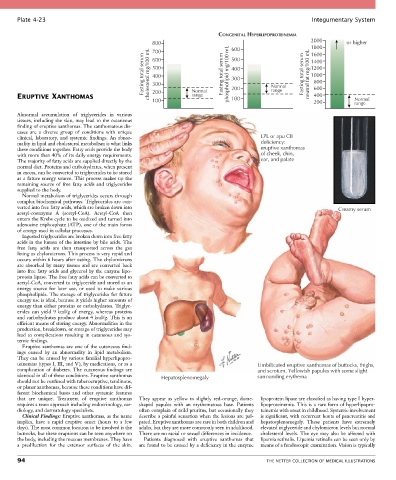
Plate 4-23                                                                                            Integumentary System

                                                                            CONGENITAL HYPERLIPOPROTEINEMIA
                                                      800                        600                        2000         or higher
                                                      700
                                                                                                            1600
                                                  Fasting total serum  cholesterol mg/100 mL  600  Fasting total serum phospholipid mg/100 mL  500  Fasting total serum neutral fat mg/100 mL 1800
                                                                                                            1400
                                                                                                            1200
                                                      500
                                                                                 400
                                                                                                            1000
                                                      400
                                                                                 300
                                                                                                             800
                                                      300
                                                                                               range
                                                                   range
                                                                                                             400
       ERUPTIVE XANTHOMAS                             200          Normal        200           Normal        600           Normal
                                                                                 100
                                                      100
                                                                                                             200
                                                                                                                           range
       Abnormal  accumulation  of  triglycerides  in  various
       tissues, including the skin, may lead to the cutaneous
       finding of eruptive xanthomas. The xanthomatous dis-
       eases  are  a  diverse  group  of  conditions  with  unique
       clinical,  laboratory,  and  systemic  findings.  An  abnor-                        LPL or apo CII
       mality in lipid and cholesterol metabolism is what links                            deficiency:
       these conditions together. Fatty acids provide the body                             eruptive xanthomas
       with more than 40% of its daily energy requirements.                                of cheek, chin,
       The majority of fatty acids are supplied directly by the                            ear, and palate
       normal diet. Proteins and carbohydrates, when present
       in excess, can be converted to triglycerides to be stored
       as a future energy source. This process makes up the
       remaining  source  of  free  fatty  acids  and  triglycerides
       supplied to the body.
         Normal metabolism of triglycerides occurs through
       complex biochemical pathways. Triglycerides are con-
       verted into free fatty acids, which are broken down into                                                       Creamy serum
       acetyl-coenzyme  A  (acetyl-CoA).  Acetyl-CoA  then
       enters the Krebs cycle to be oxidized and turned into
       adenosine triphosphate (ATP), one of the main forms
       of energy used in cellular processes.
         Ingested triglycerides are broken down into free fatty
       acids in the lumen of the intestine by bile acids. The
       free  fatty  acids  are  then  transported  across  the  gut
       lining as chylomicrons. This process is very rapid and
       occurs within 6 hours after eating. The chylomicrons
       are absorbed by many tissues and are converted back
       into free fatty acids and glycerol by the enzyme lipo-
       protein lipase. The free fatty acids can be converted to
       acetyl-CoA, converted to triglyceride and stored as an
       energy  source  for  later  use,  or  used  to  make  various
       phospholipids. The storage of triglycerides for future
       energy use is ideal, because it yields higher amounts of
       energy than either proteins or carbohydrates. Triglyc-
       erides  can  yield  9 kcal/g  of  energy,  whereas  proteins
       and carbohydrates produce about 4 kcal/g. This is an
       efficient means of storing energy. Abnormalities in the
       production, breakdown, or storage of triglycerides may
       lead  to  complications  resulting  in  cutaneous  and  sys-
       temic findings.
         Eruptive xanthomas are one of the cutaneous find-
       ings  caused  by  an  abnormality  in  lipid  metabolism.
       They can be caused by various familial hyperlipopro-
       teinemias (types I, III, and V), by medications, or as a                           Umbilicated eruptive xanthomas of buttocks, thighs,
       complication  of  diabetes.  The  cutaneous  findings  are                         and scrotum. Yellowish papules with some slight
       identical in all of these conditions. Eruptive xanthomas   Hepatosplenomegaly      surrounding erythema
       should not be confused with tuberoeruptive, tendinous,
       or planar xanthomas, because these conditions have dif-
       ferent  biochemical  bases  and  other  systemic  features
       that  are  unique.  Treatment  of  eruptive  xanthomas   They  appear  as  yellow  to  slightly  red-orange,  dome-  lipoprotein lipase are classified as having type I hyper-
       requires a team approach including endocrinology, car-  shaped  papules  with  an  erythematous  base.  Patients   lipoproteinemia. This is a rare form of hyperlipopro-
       diology, and dermatology specialists.     often complain of mild pruritus, but occasionally they   teinemia with onset in childhood. Systemic involvement
         Clinical Findings: Eruptive xanthomas, as the name   describe a painful sensation when the lesions are pal-  is significant, with recurrent bouts of pancreatitis and
       implies,  have  a  rapid  eruptive  onset  (hours  to  a  few   pated. Eruptive xanthomas are rare in both children and   hepatosplenomegaly.  These  patients  have  extremely
       days). The most common location to be involved is the   adults, but they are more commonly seen in adulthood.   elevated triglyceride and chylomicron levels but normal
       buttocks, but these eruptions can be seen anywhere on   There are no racial or sexual differences in incidence.  cholesterol  levels.  The  eye  may  also  be  affected  with
       the body, including the mucous membranes. They have   Patients  diagnosed  with  eruptive  xanthomas  that     lipemia retinalis. Lipemia retinalis can be seen only by
       a  predilection  for  the  extensor  surfaces  of  the  skin.   are found to be caused by a deficiency in the enzyme   means of a funduscopic examination. Vision is typically

       94                                                                                    THE NETTER COLLECTION OF MEDICAL ILLUSTRATIONS

