


Page 98 - The Netter Collection of Medical Illustrations - Integumentary System_ Volume 4 ( PDFDrive )
P. 98
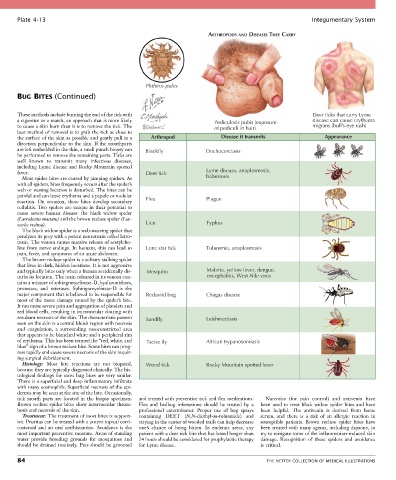
Plate 4-13                                                                                            Integumentary System

                                                                         ARTHROPODS AND DISEASES THEY CARRY


                                                   Phthirus pubis
       BUG BITES (Continued)


       These methods include burning the end of the tick with                                                Deer ticks that carry Lyme
       a cigarette or a match, an approach that is more likely             Pediculosis pubis (exposure       disease can cause erythema
       to cause a skin burn than it is to remove the tick. The             of pediculi in hair)              migrans (bull’s-eye rash)
       best method of removal is to grab the tick as close to
       the surface of the skin as possible and gently pull in a   Arthropod  Disease it transmits                Appearance
       direction perpendicular to the skin. If the mouthparts
       are left embedded in the skin, a small punch biopsy can   Blackfly  Onchocerciasis
       be performed to remove the remaining parts. Ticks are
       well  known  to  transmit  many  infectious  diseases,
       including Lyme disease and Rocky Mountain spotted
       fever.                                      Deer tick            Lyme disease, anaplasmosis,
         Most spider bites are caused by jumping spiders. As            babesiosis
       with all spiders, bites frequently occurs after the spider’s
       web or nesting location is disturbed. The bites can be
       painful and can leave erythema and a papule or nodular
       reaction.  On  occasion,  these  bites  develop  secondary   Flea  Plague
       cellulitis. Two spiders are unique in their potential to
       cause  severe  human  disease:  the  black  widow  spider
       (Latrodectus mactans) and the brown recluse spider (Lox-
       osceles reclusa).                           Lice                 Typhus
         The black widow spider is a web-weaving spider that
       paralyzes its prey with a potent neurotoxin called latro-
       toxin. The venom causes massive release of acetylcho-
       line  from  nerve  endings.  In  humans,  this  can  lead  to   Lone star tick  Tularemia, anaplasmosis
       pain, fever, and symptoms of an acute abdomen.
         The brown recluse spider is a solitary stalking spider
       that lives in dark, hidden locations. It is not aggressive
       and typically bites only when a human accidentally dis-  Mosquito  Malaria, yellow fever, dengue,
       turbs its location. The toxin released in its venom con-         encephalitis, West Nile virus
       tains a mixture of sphingomyelinase-D, hyaluronidases,
       proteases,  and  esterases.  Sphingomyelinase-D  is  the
       major component that is believed to be responsible for   Reduviid bug  Chagas disease
       most of the tissue damage caused by the spider’s bite.
       It can cause severe pain and aggregation of platelets and
       red blood cells, resulting in intravascular clotting with
       resultant necrosis of the skin. The characteristic pattern   Sandfly  Leishmaniasis
       seen on the skin is a central bluish region with necrosis
       and  coagulation,  a  surrounding  vasoconstricted  area
       that appears to be blanched white and a peripheral rim
       of erythema. This has been termed the “red, white, and   Tsetse fly  African trypanosomiasis
       blue” sign of a brown recluse bite. Some bites can prog-
       ress rapidly and cause severe necrosis of the skin requir-
       ing surgical debridement.
         Histology:  Most  bite  reactions  are  not  biopsied,   Wood tick  Rocky Mountain spotted fever
       because they are typically diagnosed clinically. The his-
       tological findings for most bug bites are very similar.
       There is a superficial and deep inflammatory infiltrate
       with many eosinophils. Superficial necrosis of the epi-
       dermis may be seen at the site of the bite. Occasionally,
       tick  mouth  parts  are  located  in  the  biopsy  specimen.   and treated with preventive tick and flea medications.   Narcotics  (for  pain  control)  and  antivenin  have
       Brown recluse spider bites show intravascular throm-  Flea  and  bedbug  infestations  should  be  treated  by  a   been used to treat black widow spider bites and have
       bosis and necrosis of the skin.           professional  exterminator.  Proper  use  of  bug  sprays   been  helpful.  The  antivenin  is  derived  from  horse
         Treatment: The treatment of most bites is support-  containing  DEET  (N,N-diethyl-m-toluamide)  and   serum,  and  there  is  a  risk  of  an  allergic  reaction  in
       ive. Pruritus can be treated with a potent topical corti-  staying in the center of wooded trails can help decrease   susceptible  patients.  Brown  recluse  spider  bites  have
       costeroid  and  an  oral  antihistamine.  Avoidance  is  the   one’s  chance  of  being  bitten.  In  endemic  areas,  any   been treated with many agents, including dapsone, to
       most important preventive measure. Areas of standing   patient with a deer tick bite that has lasted longer than   try to mitigate some of the inflammation-induced skin
       water  provide  breeding  grounds  for  mosquitoes  and   24 hours should be considered for prophylactic therapy   damage.  Recognition  of  these  spiders  and  avoidance
       should be drained routinely. Pets should be groomed   for Lyme disease.             is critical.

       84                                                                                    THE NETTER COLLECTION OF MEDICAL ILLUSTRATIONS

