


Page 109 - The Netter Collection of Medical Illustrations - Integumentary System_ Volume 4 ( PDFDrive )
P. 109
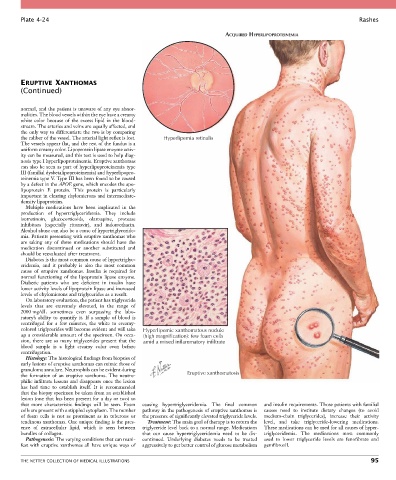
Plate 4-24                                                                                                           Rashes

                                                                               ACQUIRED HYPERLIPOPROTEINEMIA


        ERUPTIVE XANTHOMAS
        (Continued)


        normal, and the patient is unaware of any eye abnor-
        malities. The blood vessels within the eye have a creamy
        white  color  because  of  the  excess  lipid  in  the  blood-
        stream. The arteries and veins are equally affected, and
        the only way to differentiate the two is by comparing
        the caliber of the vessel. The arterial light reflex is lost.   Hyperlipemia retinalis
        The vessels appear flat, and the rest of the fundus is a
        uniform creamy color. Lipoprotein lipase enzyme activ-
        ity can be measured, and this test is used to help diag-
        nosis type I hyperlipoproteinemia. Eruptive xanthomas
        can also be seen as part of hyperlipoproteinemia type
        III (familial dysbetalipoproteinemia) and hyperlipopro-
        teinemia type V. Type III has been found to be caused
        by a defect in the APOE gene, which encodes the apo-
        lipoprotein  E  protein.  This  protein  is  particularly
        important in clearing chylomicrons and intermediate-
        density lipoproteins.
          Multiple  medications  have  been  implicated  in  the
        production  of  hypertriglyceridemia.  They  include
        isotretinoin,  glucocorticoids,  olanzapine,  protease
        inhibitors  (especially  ritonavir),  and  indomethacin.
        Alcohol abuse can also be a cause of hypertriglyceride-
        mia. Patients presenting with eruptive xanthomas who
        are  taking  any  of  these  medications  should  have  the
        medication  discontinued  or  another  substituted  and
        should be reevaluated after treatment.
          Diabetes is the most common cause of hypertriglyc-
        eridemia,  and  it  probably  is  also  the  most  common
        cause  of  eruptive  xanthomas.  Insulin  is  required  for
        normal  functioning  of  the  lipoprotein  lipase  enzyme.
        Diabetic  patients  who  are  deficient  in  insulin  have
        lower activity levels of lipoprotein lipase and increased
        levels of chylomicrons and triglycerides as a result.
          On laboratory evaluation, the patient has triglyceride
        levels  that  are  extremely  elevated,  in  the  range  of
        2000 mg/dL  sometimes  even  surpassing  the  labo-
        ratory’s  ability  to  quantify  it.  If  a  sample  of  blood  is
        centrifuged  for  a  few  minutes,  the  white  to  creamy-
        colored triglycerides will become evident and will take   Hyperlipemic xanthomatous nodule
        up a considerable amount of the specimen. On occa-  (high magnification): few foam cells
        sion, there are so many triglycerides present that the   amid a mixed inflammatory infiltrate
        blood  sample  is  a  light  creamy  color  even  before
        centrifugation.
          Histology: The histological findings from biopsies of
        early lesions of eruptive xanthomas can mimic those of
        granuloma annulare. Neutrophils can be evident during
        the  formation  of  an  eruptive  xanthoma.  The  neutro-  Eruptive xanthomatosis
        philic infiltrate lessens and disappears once the lesion
        has  had  time  to  establish  itself.  It  is  recommended
        that the biopsy specimen be taken from an established
        lesion (one that has been present for a day or two) so
        that  more  characteristic  findings  will  be  seen.  Foam   causing  hypertriglyceridemia.  The  final  common   and insulin requirements. Those patients with familial
        cells are present with a stippled cytoplasm. The number   pathway in the pathogenesis of eruptive xanthomas is   causes  need  to  institute  dietary  changes  (to  avoid
        of  foam  cells  is  not  as  prominent  as  in  tuberous  or   the presence of significantly elevated triglyceride levels.  medium-chain  triglycerides),  increase  their  activity
        tendinous xanthomas. One unique finding is the pres-  Treatment: The main goal of therapy is to return the   level,  and  take  triglyceride-lowering  medications.
        ence  of  extracellular  lipid,  which  is  seen  between   triglyceride level back to a normal range. Medications   These medications can be used for all causes of hyper-
        bundles of collagen.                      that  can  cause  hypertriglyceridemia  need  to  be  dis-  triglyceridemia.  The  medications  most  commonly
          Pathogenesis: The varying conditions that can mani-  continued.  Underlying  diabetes  needs  to  be  treated   used  to  lower  triglyceride  levels  are  fenofibrate  and
        fest  with  eruptive  xanthomas  all  have  unique  ways  of   aggressively to get better control of glucose metabolism   gemfibrozil.


        THE NETTER COLLECTION OF MEDICAL ILLUSTRATIONS                                                                           95

