


Page 110 - The Netter Collection of Medical Illustrations - Integumentary System_ Volume 4 ( PDFDrive )
P. 110
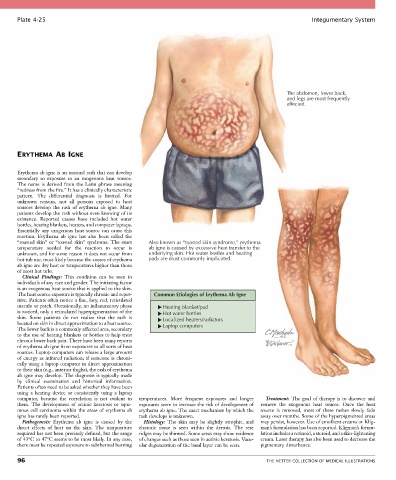
Plate 4-25                                                                                            Integumentary System


                                                                                                    The abdomen, lower back,
                                                                                                    and legs are most frequently
                                                                                                    affected.


       ERYTHEMA AB IGNE

       Erythema ab igne is an unusual rash that can develop
       secondary  to  exposure  to  an  exogenous  heat  source.
       The  name  is  derived  from  the  Latin  phrase  meaning
       “redness from the fire.” It has a clinically characteristic
       pattern.  The  differential  diagnosis  is  limited.  For
       unknown  reasons,  not  all  persons  exposed  to  heat
       sources  develop  the  rash  of  erythema  ab  igne.  Many
       patients develop the rash without even knowing of its
       existence.  Reported  causes  have  included  hot  water
       bottles, heating blankets, heaters, and computer laptops.
       Essentially  any  exogenous  heat  source  can  cause  this
       reaction.  Erythema  ab  igne  has  also  been  called  the
       “roasted skin” or “toasted skin” syndrome. The exact   Also known as “toasted skin syndrome,” erythema
       temperature  needed  for  the  reaction  to  occur  is   ab igne is caused by excessive heat transfer to the
       unknown, and for some reason it does not occur from   underlying skin. Hot water bottles and heating
       hot tub use, most likely because the causes of erythema   pads are most commonly implicated.
       ab igne are dry heat or temperatures higher than those
       of most hot tubs.
         Clinical  Findings:  This  condition  can  be  seen  in
       individuals of any race and gender. The initiating factor
       is an exogenous heat source that is applied to the skin.
       The heat source exposure is typically chronic and repet-  Common Etiologies of Erythema Ab Igne
       itive. Patients often notice a fine, lacy, red, reticulated
       macule or patch. Occasionally, no inflammatory phase   Heating blanket/pad
       is noticed, only a reticulated hyperpigmentation of the   Hot water bottles
       skin.  Some  patients  do  not  realize  that  the  rash  is   Localized heaters/radiators
       located on skin in direct approximation to a heat source.   Laptop computers
       The lower back is a commonly affected area, secondary
       to the use of heating blankets or bottles to help treat
       chronic lower back pain. There have been many reports
       of erythema ab igne from exposures to all sorts of heat
       sources. Laptop computers can release a large amount
       of energy as infrared radiation; if someone is chroni-
       cally using a laptop computer in direct approximation
       to their skin (e.g., anterior thighs), the rash of erythema
       ab igne may develop. The diagnosis is typically made
       by  clinical  examination  and  historical  information.
       Patients often need to be asked whether they have been
       using  a  heating  device  or  consistently  using  a  laptop
       computer,  because  the  correlation  is  not  evident  to   temperatures.  More  frequent  exposures  and  longer   Treatment:  The  goal  of  therapy  is  to  discover  and
       them.  The  development  of  actinic  keratosis  or  squa-  exposures seem to increase the risk of development of   remove  the  exogenous  heat  source.  Once  the  heat
       mous cell carcinoma within the areas of erythema ab   erythema ab igne. The exact mechanism by which the   source  is  removed,  most  of  these  rashes  slowly  fade
       igne has rarely been reported.            rash develops is unknown.                 away over months. Some of the hyperpigmented areas
         Pathogenesis:  Erythema  ab  igne  is  caused  by  the   Histology:  The  skin  may  be  slightly  atrophic,  and   may persist, however. Use of emollient creams or Klig-
       direct  effects  of  heat  on  the  skin.  The  temperature   elastotic  tissue  is  seen  within  the  dermis.  The  rete   man’s formulation has been reported. Kligman’s formu-
       required has not been precisely defined, but the range   ridges may be thinned. Some areas may show evidence   lation includes a retinoid, a steroid, and a skin-lightening
       of 43°C to 47°C seems to be most likely. In any case,   of changes such as those seen in actinic keratosis. Vacu-  cream. Laser therapy has also been used to decrease the
       there must be repeated exposure to subthermal burning   olar degeneration of the basal layer can be seen.  pigmentary disturbance.

       96                                                                                    THE NETTER COLLECTION OF MEDICAL ILLUSTRATIONS

