


Page 115 - The Netter Collection of Medical Illustrations - Integumentary System_ Volume 4 ( PDFDrive )
P. 115
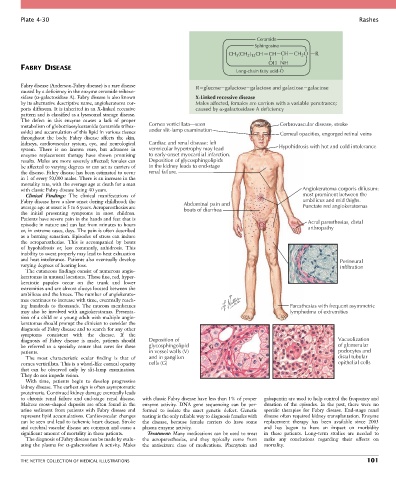
Plate 4-30                                                                                                           Rashes


                                                                                          Ceramide
                                                                                         Sphingosine
                                                                                CH (CH ) CH   CH CH    CH 2 O  R
                                                                                      2 12
                                                                                   3
                                                                                              OH NH
        FABRY DISEASE
                                                                                   Long-chain fatty acid-O
        Fabry disease (Anderson-Fabry disease) is a rare disease     R glucose galactose galactose and galactose galactose
        caused by a deficiency in the enzyme ceramide trihexo-
        sidase (α-galactosidase A). Fabry disease is also known      X-Linked recessive disease
        by its alternative descriptive name, angiokeratoma cor-      Males affected, females are carriers with a variable penetrance;
        poris diffusum. It is inherited in an X-linked recessive     caused by  -galactosidase A deficiency
        pattern and is classified as a lysosomal storage disease.
        The  defect  in  this  enzyme  causes  a  lack  of  proper
        metabolism of globotriaosylceramide (ceramide trihex-  Cornea verticillata—seen           Cerbrovascular disease, stroke
        oside) and accumulation of this lipid in various tissues   under slit-lamp examination    Corneal opacities, engorged retinal veins
        throughout  the  body.  Fabry  disease  affects  the  skin,
        kidneys,  cardiovascular  system,  eye,  and  neurological   Cardiac and renal disease: left  Hypohidrosis with hot and cold intolerance
        system.  There  is  no  known  cure,  but  advances  in   ventricular hypertrophy may lead
        enzyme  replacement  therapy  have  shown  promising   to early-onset myocardial infarction.
        results. Males are more severely affected; females can   Deposition of glycosphingolipids
        be affected to varying degrees or can act as carriers of   in the kidney leads to end-stage
        the disease. Fabry disease has been estimated to occur   renal failure.
        in 1 of every 50,000 males. There is an increase in the
        mortality rate, with the average age at death for a man
        with classic Fabry disease being 40 years.                                                       Angiokeratoma corporis diffusum:
          Clinical  Findings:  The  clinical  manifestations  of                                         most prominent between the
        Fabry disease have a slow onset during childhood; the   Abdominal pain and                       umbilicus and mid thighs.
        average age at onset is 5 to 6 years. Acroparesthesias are   bouts of diarrhea                   Punctate red angiokeratomas
        the  initial  presenting  symptoms  in  most  children.
        Patients have severe pain in the hands and feet that is
        episodic in nature and can last from minutes to hours                                              Acral paresthesias, distal
        or, in extreme cases, days. The pain is often described                                            arthropathy
        as  a  burning  sensation.  Episodes  of  stress  can  induce
        the  acroparesthesias.  This  is  accompanied  by  bouts
        of  hypohidrosis  or,  less  commonly,  anhidrosis.  This
        inability to sweat properly may lead to heat exhaustion
        and heat intolerance. Patients also eventually develop                                                        Perineural
        varying degrees of hearing loss.                                                                              infiltration
          The cutaneous findings consist of numerous angio-
        keratomas in unusual locations. These fine, red, hyper-
        keratotic  papules  occur  on  the  trunk  and  lower
        extremities and are almost always located between the
        umbilicus and the knees. The number of angiokerato-
        mas continues to increase with time, eventually reach-
        ing  hundreds  to  thousands.  The  mucous  membranes                                        Paresthesias with frequent asymmetric
        may  also  be  involved  with  angiokeratomas.  Presenta-                                    lymphedma of extremities
        tion of a child or a young adult with multiple angio-
        keratomas should prompt the clinician to consider the
        diagnosis of Fabry disease and to search for any other
        symptoms  consistent  with  the  disease.  If  the
        diagnosis  of  Fabry  disease  is  made,  patients  should     Deposition of                                  Vacuolization
        be  referred  to  a  specialty  center  that  cares  for  these   glycosphingolipid  G                        of glomerular
        patients.                                   in vessel walls (V)                                               podocytes and
          The  most  characteristic  ocular  finding  is  that  of   and in ganglion      V                           distal tubular
        cornea verticillata. This is a whorl-like corneal opacity   cells (G)                                         epithelial cells
        that  can  be  observed  only  by  slit-lamp  examination.
        They do not impede vision.
          With  time,  patients  begin  to  develop  progressive
        kidney disease. The earliest sign is often asymptomatic
        proteinuria. Continued kidney damage eventually leads
        to  chronic  renal  failure  and  end-stage  renal  disease.   with classic Fabry disease have less than 1% of proper   gabapentin are used to help control the frequency and
        Maltese  cross–shaped  deposits  are  often  found  in  the   enzyme  activity.  DNA  gene  sequencing  can  be  per-  duration  of  the  episodes.  In  the  past,  there  were  no
        urine  sediment  from  patients  with  Fabry  disease  and   formed  to  isolate  the  exact  genetic  defect.  Genetic   specific  therapies  for  Fabry  disease.  End-stage  renal
        represent lipid accumulations. Cardiovascular changes   testing is the only reliable way to diagnosis females with   disease often required kidney transplantation. Enzyme
        can be seen and lead to ischemic heart disease. Stroke   the  disease,  because  female  carriers  do  have  some   replacement  therapy  has  been  available  since  2003
        and cerebral vascular disease are common and cause a   plasma enzyme activity.      and  has  begun  to  have  an  impact  on  morbidity
        significant amount of mortality in these patients.  Treatment: Many medications can be used to treat   in  these  patients.  Long-term  studies  are  needed  to
          The diagnosis of Fabry disease can be made by evalu-  the  acroparesthesias,  and  they  typically  come  from     make  any  conclusions  regarding  their  effects  on
        ating the plasma for α-galactosidase A activity. Males   the  antiseizure  class  of  medications.  Phenytoin  and   mortality.


        THE NETTER COLLECTION OF MEDICAL ILLUSTRATIONS                                                                          101

