


Page 145 - The Netter Collection of Medical Illustrations - Integumentary System_ Volume 4 ( PDFDrive )
P. 145
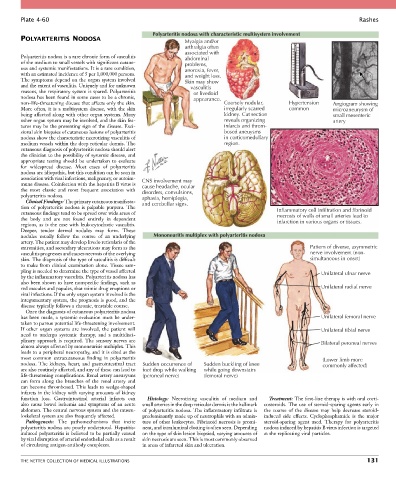
Plate 4-60                                                                                                           Rashes

                                                      Polyarteritis nodosa with characteristic multisystem involvement
        POLYARTERITIS NODOSA                                     Myalgia and/or
                                                                 arthralgia often
                                                                 associated with
        Polyarteritis nodosa is a rare chronic form of vasculitis   abdominal
        of the medium to small vessels with significant cutane-  problems,
        ous and systemic manifestations. It is a rare condition,   anorexia, fever,
        with an estimated incidence of 5 per 1,000,000 persons.   and weight loss.
        The symptoms depend on the organ system involved         Skin may show
        and the extent of vasculitis. Uniquely and for unknown       vasculitis
        reasons, the respiratory system is spared. Polyarteritis         or livedoid
        nodosa has been found in some cases to be a chronic,           appearance.
        non–life-threatening disease that affects only the skin.              Coarsely nodular,      Hypertension   Angiogram showing
        More often, it is a multisystem disease, with the skin                irregularly scarred    common         microaneurysm of
        being affected along with other organ systems. Many                   kidney. Cut section                   small mesenteric
        other organ system may be involved, and the skin fea-                 reveals organizing                    artery
        tures may be the presenting sign of the disease. Exci-                infarcts and throm-
        sional skin biopsies of cutaneous lesions of polyarteritis            bosed aneuysms
        nodosa show the characteristic necrotizing vasculitis of              in corticomedullary
        medium vessels within the deep reticular dermis. The                  region.
        cutaneous diagnosis of polyarteritis nodosa should alert
        the clinician to the possibility of systemic disease, and
        appropriate  testing  should  be  undertaken  to  evaluate
        for  widespread  disease.  Most  cases  of  polyarteritis
        nodosa are idiopathic, but this condition can be seen in
        association with viral infections, malignancy, or autoim-  CNS involvement may
        mune disease. Coinfection with the hepatitis B virus is   cause headache, ocular
        the  most  classic  and  most  frequent  association  with   disorders, convulsions,
        polyarteritis nodosa.                     aphasia, hemiplegia,
          Clinical Findings: The primary cutaneous manifesta-  and cerebellar signs.
        tion  of  polyarteritis  nodosa  is  palpable  purpura.  The                             Inflammatory cell infiltration and fibrinoid
        cutaneous findings tend to be spread over wide areas of                                  necrosis of walls of small arteries lead to
        the  body  and  are  not  found  entirely  in  dependent                                 infarction in various organs or tissues.
        regions, as is the case with leukocytoclastic vasculitis.
        Deeper,  tender  dermal  nodules  may  form.  These
        nodules  usually  follow  the  course  of  an  underlying   Mononeuritis multiplex with polyarteritis nodosa
        artery. The patient may develop livedo reticularis of the
        extremities, and secondary ulcerations may form as the                                              Pattern of diverse, asymmetric
        vasculitis progresses and causes necrosis of the overlying                                          nerve involvement (non-
        skin. The diagnosis of the type of vasculitis is difficult                                          simultaneous in onset)
        to make from clinical examination alone. Tissue sam-
        pling is needed to determine the type of vessel affected                                                Unilateral ulnar nerve
        by the inflammatory vasculitis. Polyarteritis nodosa has
        also been shown to have nonspecific findings, such as
        red macules and papules, that mimic drug eruptions or                                                   Unilateral radial nerve
        viral infections. If the only organ system involved is the
        integumentary system, the prognosis is good, and the
        disease typically follows a chronic, treatable course.
          Once the diagnosis of cutaneous polyarteritis nodosa
        has been made, a systemic evaluation must be under-                                                     Unilateral femoral nerve
        taken to pursue potential life-threatening involvement.
        If  other  organ  systems  are  involved,  the  patient  will                                           Unilateral tibial nerve
        need  to  undergo  systemic  therapy,  and  a  multidisci-
        plinary  approach  is  required.  The  sensory  nerves  are                                             Bilateral peroneal nerves
        almost always affected by mononeuritis multiplex. This
        leads to a peripheral neuropathy, and it is cited as the
        most  common  extracutaneous  finding  in  polyarteritis                                                (Lower limb more
        nodosa. The kidneys, heart, and gastrointestinal tract   Sudden occurrence of  Sudden buckling of knee  commonly affected)
        are also routinely affected, and any of these can lead to   foot drop while walking  while going downstairs
        life-threatening complications. Renal artery aneurysms   (peroneal nerve)  (femoral nerve)
        can  form  along  the  branches  of  the  renal  artery  and
        can become thrombosed. This leads to wedge-shaped
        infarcts in the kidney with varying amounts of kidney
        function  loss.  Gastrointestinal  arterial  infarcts  can     Histology:  Necrotizing  vasculitis  of  medium  and   Treatment: The first-line therapy is with oral corti-
        also  cause  bowel  ischemia  and  symptoms  of  an  acute   small arteries in the deep reticular dermis is the hallmark   costeroids. The use of steroid-sparing agents early in
        abdomen. The central nervous system and the muscu-  of polyarteritis nodosa. The inflammatory infiltrate is   the  course  of  the  disease  may  help  decrease  steroid-
        loskeletal system are also frequently affected.  predominantly made up of neutrophils with an admix-  induced  side  effects.  Cyclophosphamide  is  the  major
          Pathogenesis:  The  pathomechanisms  that  incite   ture of other leukocytes. Fibrinoid necrosis is promi-  steroid-sparing  agent  used.  Therapy  for  polyarteritis
        polyarteritis nodosa are poorly understood. Hepatitis-  nent, and intraluminal clotting is often seen. Depending   nodosa induced by hepatitis B virus infection is targeted
        induced polyarteritis is believed to be partially caused   on the type of skin lesion biopsied, varying amounts of   at the replicating viral particles.
        by viral disruption of arterial endothelial cells as a result   skin necrosis are seen. This is most commonly observed
        of circulating antigen-antibody complexes.  in areas of infarcted skin and ulceration.


        THE NETTER COLLECTION OF MEDICAL ILLUSTRATIONS                                                                          131

