


Page 148 - The Netter Collection of Medical Illustrations - Integumentary System_ Volume 4 ( PDFDrive )
P. 148
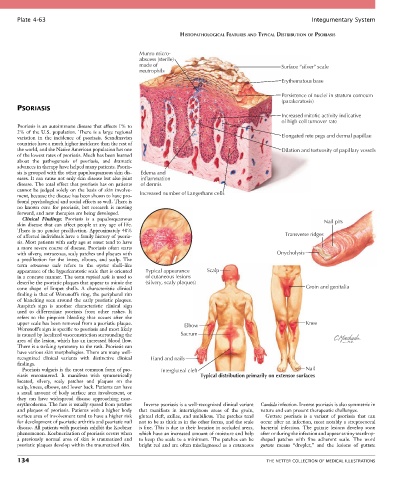
Plate 4-63                                                                                            Integumentary System

                                                               HISTOPATHOLOGICAL FEATURES AND TYPICAL DISTRIBUTION OF PSORIASIS


                                                 Munro micro-
                                                 abscess (sterile)
                                                 made of                                          Surface “silver” scale
                                                 neutrophils
                                                                                                  Erythematous base

                                                                                                  Persistence of nuclei in stratum corneum
                                                                                                  (parakeratosis)
       PSORIASIS
                                                                                                  Increased mitotic activity indicative
                                                                                                  of high cell turnover rate
       Psoriasis is an autoimmune disease that affects 1% to
       2% of the U.S. population. There is a large regional
       variation  in  the  incidence  of  psoriasis.  Scandinavian                                Elongated rete pegs and dermal papillae
       countries have a much higher incidence than the rest of
       the world, and the Native American population has one                                      Dilation and tortuosity of papillary vessels
       of the lowest rates of psoriasis. Much has been learned
       about  the  pathogenesis  of  psoriasis,  and  dramatic
       advances in therapy have helped many patients. Psoria-
       sis is grouped with the other papulosquamous skin dis-  Edema and
       eases. It can cause not only skin disease but also joint   inflammation
       disease. The total effect that psoriasis has on patients   of dermis
       cannot  be  judged  solely  on  the  basis  of  skin  involve-
       ment, because the disease has been shown to have pro-  Increased number of Langerhans cells
       found psychological and social effects as well. There is
       no  known  cure  for  psoriasis,  but  research  is  moving
       forward, and new therapies are being developed.
         Clinical  Findings:  Psoriasis  is  a  papulosquamous
       skin  disease  that  can  affect  people  at  any  age  of  life.                                         Nail pits
       There is no gender predilection. Approximately 40%
       of affected individuals have a family history of psoria-                                    Transverse ridges
       sis. Most patients with early age at onset tend to have
       a more severe course of disease. Psoriasis often starts
       with silvery, ostraceous, scaly patches and plaques with                                  Onycholysis
       a  predilection  for  the  knees,  elbows,  and  scalp.  The
       term  ostraceous  scale  refers  to  the  oyster  shell–like
       appearance of the hyperkeratotic scale that is oriented   Typical appearance  Scalp
       in a concave manner. The term rupioid scale is used to   of cutaneous lesions
       describe the psoriatic plaques that appear to mimic the   (silvery, scaly plaques)
       cone  shape  of  limpet  shells.  A  characteristic  clinical                                       Groin and genitalia
       finding is that of Woronoff’s ring, the peripheral rim
       of  blanching  seen  around  the  early  psoriatic  plaques.
       Auspitz’s  sign  is  another  characteristic  clinical  sign
       used  to  differentiate  psoriasis  from  other  rashes.  It
       refers  to  the  pinpoint  bleeding  that  occurs  after  the
       upper scale has been removed from a psoriatic plaque.     Elbow                                     Knee
       Woronoff’s sign is specific to psoriasis and most likely
       is caused by localized vasoconstriction surrounding the   Sacrum
       area of the lesion, which has an increased blood flow.
       There is a striking symmetry to the rash. Psoriasis can
       have various skin morphologies. There are many well-
       recognized  clinical  variants  with  distinctive  clinical   Hand and nails
       findings.
         Psoriasis vulgaris is the most common form of pso-  Intergluteal cleft                            Nail
       riasis  encountered.  It  manifests  with  symmetrically       Typical distribution primarily on extensor surfaces
       located,  silvery,  scaly  patches  and  plaques  on  the
       scalp, knees, elbows, and lower back. Patients can have
       a  small  amount  of  body  surface  area  involvement,  or
       they  can  have  widespread  disease  approaching  near-
       erythroderma. The face is usually spared from patches   Inverse psoriasis is a well-recognized clinical variant   Candida infection. Inverse psoriasis is also symmetric in
       and  plaques  of  psoriasis.  Patients  with  a  higher  body   that  manifests  in  intertriginous  areas  of  the  groin,   nature and can present therapeutic challenges.
       surface area of involvement tend to have a higher risk   gluteal cleft, axillae, and umbilicus. The patches tend   Guttate  psoriasis  is  a  variant  of  psoriasis  that  can
       for development of psoriatic arthritis and psoriatic nail   not to be as thick as in the other forms, and the scale   occur after an infection, most notably a streptococcal
       disease. All patients with psoriasis exhibit the Koebner   is fine. This is due to their location in occluded areas,   bacterial  infection.  The  guttate  lesions  develop  soon
       phenomenon. Koebnerization of psoriasis occurs when   which have an increased amount of moisture and help   after or during the infection and appear as tiny teardrop-
       a  previously  normal  area  of  skin  is  traumatized  and   to keep the scale to a minimum. The patches can be   shaped  patches  with  fine  adherent  scale.  The  word
       psoriatic plaques develop within the traumatized skin.  bright red and are often misdiagnosed as a cutaneous   guttate  means  “droplet,”  and  the  lesions  of  guttate

       134                                                                                   THE NETTER COLLECTION OF MEDICAL ILLUSTRATIONS

