


Page 149 - The Netter Collection of Medical Illustrations - Integumentary System_ Volume 4 ( PDFDrive )
P. 149
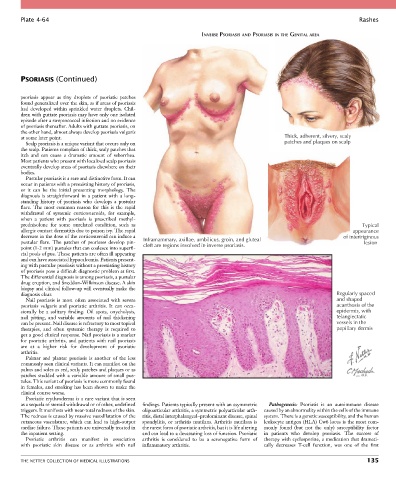
Plate 4-64                                                                                                           Rashes

                                                                       INVERSE PSORIASIS AND PSORIASIS IN THE GENITAL AREA


        PSORIASIS (Continued)


        psoriasis  appear  as  tiny  droplets  of  psoriatic  patches
        found generalized over the skin, as if areas of psoriasis
        had  developed  within  sprinkled  water  droplets.  Chil-
        dren with guttate psoriasis may have only one isolated
        episode after a streptococcal infection and no evidence
        of psoriasis thereafter. Adults with guttate psoriasis, on
        the other hand, almost always develop psoriasis vulgaris
        at some later point.                                                                       Thick, adherent, silvery, scaly
          Scalp psoriasis is a unique variant that occurs only on                                  patches and plaques on scalp
        the scalp. Patients complain of thick, scaly patches that
        itch  and  can  cause  a  dramatic  amount  of  seborrhea.
        Most patients who present with localized scalp psoriasis
        eventually develop areas of psoriasis elsewhere on their
        bodies.
          Pustular psoriasis is a rare and distinctive form. It can
        occur in patients with a preexisting history of psoriasis,
        or  it  can  be  the  initial  presenting  morphology.  The
        diagnosis  is  straightforward  in  a  patient  with  a  long-
        standing  history  of  psoriasis  who  develops  a  pustular
        flare.  The  most  common  reason  for  this  is  the  rapid
        withdrawal  of  systemic  corticosteroids,  for  example,
        when  a  patient  with  psoriasis  is  prescribed  methyl-
        prednisolone  for  some  unrelated  condition,  such  as                                                              Typical
        allergic contact dermatitis due to poison ivy. The rapid                                                           appearance
        decrease in the dose of the corticosteroid can induce a                                                         of intertriginous
        pustular  flare.  The  patches  of  psoriases  develop  pin-  Inframammary, axillae, umbilicus, groin, and gluteal     lesion
        point (1-2 mm) pustules that can coalesce into superfi-  cleft are regions involved in inverse psoriasis.
        cial pools of pus. These patients are often ill appearing
        and can have associated hypocalcemia. Patients present-
        ing with pustular psoriasis without a preexisting history
        of psoriasis pose a difficult diagnostic problem at first.
        The differential diagnosis is among psoriasis, a pustular
        drug eruption, and Sneddon-Wilkinson disease. A skin
        biopsy and clinical follow-up will eventually make the
        diagnosis clear.                                                                                             Regularly spaced
          Nail  psoriasis  is  most  often  associated  with  severe                                                 and shaped
        psoriasis  vulgaris  and  psoriatic  arthritis.  It  can  occa-                                              acanthosis of the
        sionally  be  a  solitary  finding.  Oil  spots,  onycholysis,                                               epidermis, with
        nail  pitting,  and  variable  amounts  of  nail  thickening                                                 telangiectatic
        can be present. Nail disease is refractory to most topical                                                   vessels in the
        therapies,  and  often  systemic  therapy  is  required  to                                                  papillary dermis
        get a good clinical response. Nail psoriasis is a marker
        for  psoriatic  arthritis,  and  patients  with  nail  psoriasis
        are  at  a  higher  risk  for  development  of  psoriatic
        arthritis.
          Palmar  and  plantar  psoriasis  is  another  of  the  less
        commonly seen clinical variants. It can manifest on the
        palms and soles as red, scaly patches and plaques or as
        patches studded with a variable amount of small pus-
        tules. This variant of psoriasis is more commonly found
        in females, and smoking has been shown to make the
        clinical course worse.
          Psoriatic erythroderma is a rare variant that is seen
        as a sequela of steroid withdrawal or of other, undefined   findings. Patients typically present with an asymmetric   Pathogenesis:  Psoriasis  is  an  autoimmune  disease
        triggers. It manifests with near-total redness of the skin.   oligoarticular arthritis, a symmetric polyarticular arth-  caused by an abnormality within the cells of the immune
        The redness is caused by massive vasodilatation of the   ritis, distal interphalangeal–predominant disease, spinal   system. There is a genetic susceptibility, and the human
        cutaneous vasculature, which can lead to high-output   spondylitis, or arthritis mutilans. Arthritis mutilans is   leukocyte antigen (HLA) Cw6 locus is the most com-
        cardiac failure. These patients are universally treated in   the rarest form of psoriatic arthritis, but it is life altering   monly  found  (but  not  the  only)  susceptibility  factor
        the inpatient setting.                    and can lead to a devastating loss of function. Psoriatic   in  patients  who  develop  psoriasis.  The  success  of
          Psoriatic  arthritis  can  manifest  in  association     arthritis  is  considered  to  be  a  seronegative  form  of   therapy with cyclosporine, a medication that dramati-
        with  psoriatic  skin  disease  or  as  arthritis  with  nail     inflammatory arthritis.  cally  decreases  T-cell  function,  was  one  of  the  first


        THE NETTER COLLECTION OF MEDICAL ILLUSTRATIONS                                                                          135

