


Page 146 - The Netter Collection of Medical Illustrations - Integumentary System_ Volume 4 ( PDFDrive )
P. 146
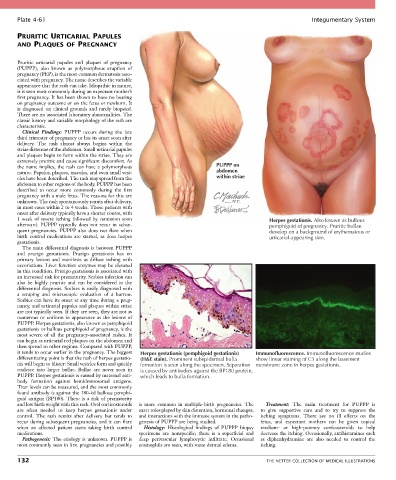
Plate 4-61                                                                                            Integumentary System

       PRURITIC URTICARIAL PAPULES
       AND PLAQUES OF PREGNANCY


       Pruritic  urticarial  papules  and  plaques  of  pregnancy
       (PUPPP),  also  known  as  polymorphous  eruption  of
       pregnancy (PEP), is the most common dermatosis asso-
       ciated with pregnancy. The name describes the variable
       appearance that the rash can take. Idiopathic in nature,
       it is seen most commonly during an expectant mother’s
       first pregnancy. It has been shown to have no bearing
       on pregnancy outcome or on the fetus or newborn. It
       is  diagnosed  on  clinical  grounds  and  rarely  biopsied.
       There are no associated laboratory abnormalities. The
       classic history and variable morphology of the rash are
       characteristic.
         Clinical  Findings:  PUPPP  occurs  during  the  late
       third trimester of pregnancy or has its onset soon after
       delivery.  The  rash  almost  always  begins  within  the
       striae distensae of the abdomen. Small urticarial papules
       and plaques begin to form within the striae. They are
       extremely pruritic and cause significant discomfort. As
       the  name  implies,  the  rash  can  have  a  polymorphous           PUPPP on
       nature. Papules, plaques, macules, and even small vesi-              abdomen
       cles have been described. The rash may spread from the               within striae
       abdomen to other regions of the body. PUPPP has been
       described  to  occur  more  commonly  during  the  first
       pregnancy with a male fetus. The reasons for this are
       unknown. The rash spontaneously remits after delivery,
       in most cases within 2 to 4 weeks. Those patients with
       onset after delivery typically have a shorter course, with
       1  week  of  severe  itching  followed  by  remission  soon                            Herpes gestationis. Also known as bullous
       afterward.  PUPPP  typically  does  not  recur  in  subse-                             pemphigoid of pregnancy. Pruritic bullae
       quent  pregnancies.  PUPPP  also  does  not  flare  when                               develop on a background of erythematous or
       birth  control  medications  are  started,  as  does  herpes                           urticarial-appearing skin.
       gestationis.
         The main differential diagnosis is between PUPPP
       and  prurigo  gestationis.  Prurigo  gestationis  has  no
       primary  lesions  and  manifests  as  diffuse  itching  with
       excoriations. Liver function enzymes may be elevated
       in this condition. Prurigo gestationis is associated with
       an increased risk for prematurity. Scabies infection can
       also  be  highly  pruritic  and  can  be  considered  in  the
       differential diagnosis. Scabies is easily diagnosed with
       a  scraping  and  microscopic  evaluation  of  a  burrow.
       Scabies can have its onset at any time during a preg-
       nancy, and urticarial papules and plaques within striae
       are not typically seen. If they are seen, they are not as
       numerous  or uniform in  appearance  as  the  lesions  of
       PUPPP. Herpes gestationis, also known as pemphigoid
       gestationis or bullous pemphigoid of pregnancy, is the
       most severe of all the pregnancy-associated rashes. It
       can begin as urticarial red plaques on the abdomen and
       then spread to other regions. Compared with PUPPP,
       it tends to occur earlier in the pregnancy. The biggest   Herpes gestationis (pemphigoid gestationis)  Immunofluorescence. Immunofluorescence studies
       differentiating point is that the rash of herpes gestatio-  (H&E stain). Prominent subepidermal bulla  show linear staining of C3 along the basement
       nis will begin to blister: Small vesicles form and quickly   formation is seen along the specimen. Separation  membrane zone in herpes gestationis.
       coalesce  into  larger  bullae.  Bullae  are  never  seen  in   is caused by antibodies against the BP180 protein,
       PUPPP. Herpes gestationis is caused by maternal anti-  which leads to bulla formation.
       body  formation  against  hemidesmosomal  antigens.
       Titer levels can be measured, and the most commonly
       found antibody is against the 180-kd bullous pemphi-
       goid  antigen  (BP180).  There  is  a  risk  of  prematurity
       and low birth weight with this rash. Oral corticosteroids   is  more  common  in  multiple-birth  pregnancies.  The   Treatment:  The  main  treatment  for  PUPPP  is
       are  often  needed  to  keep  herpes  gestationis  under   exact roles played by skin distention, hormonal changes,   to  give  supportive  care  and  to  try  to  suppress  the
       control.  The  rash  remits  after  delivery  but  tends  to   and interactions with the immune system in the patho-  itching  symptoms.  There  are  no  ill  effects  on  the
       recur during subsequent pregnancies, and it can flare   genesis of PUPPP are being studied.  fetus,  and  expectant  mothers  can  be  given  topical
       when  an  affected  patient  starts  taking  birth  control   Histology:  Histological  findings  of  PUPPP  biopsy   medium-  or  high-potency  corticosteroids  to  help
       medications.                              specimens  are  nonspecific;  there  is  a  superficial  and   decrease the itching. Occasionally, antihistamines such
         Pathogenesis:  The  etiology  is  unknown.  PUPPP  is   deep  perivascular  lymphocytic  infiltrate.  Occasional   as  diphenhydramine  are  also  needed  to  control  the
       most commonly seen in first pregnancies and possibly   eosinophils are seen, with some dermal edema.  itching.

       132                                                                                   THE NETTER COLLECTION OF MEDICAL ILLUSTRATIONS

