


Page 151 - The Netter Collection of Medical Illustrations - Integumentary System_ Volume 4 ( PDFDrive )
P. 151
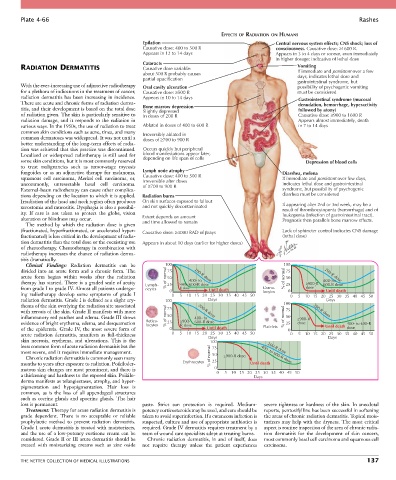
Plate 4-66                                                                                                           Rashes

                                                                             EFFECTS OF RADIATION ON HUMANS
                                                  Epilation                                     Central nervous system effects; CNS shock; loss of
                                                  Causative dose: 400 to 500 R                  consciousness. Causative dose: ≥1600 R.
                                                  Appears in 12 to 14 days                      Appears in 3 to 4 days or sooner, even immediately
                                                                                                in higher dosage: indicative of lethal dose
                                                  Cataracts
        RADIATION DERMATITIS                      Causative dose variable:                              Vomiting
                                                  about 500 R probably causes                           If immediate and persistent over a few
                                                  partial opacification                                 days, indicates lethal dose and
                                                                                                        gastrointestinal syndrome, but
        With the ever-increasing use of adjunctive radiotherapy   Oral cavity ulceration                possibility of psychogenic vomiting
        for a plethora of indications in the treatment of cancer,   Causative dose: ≥500 R              must be considered
        radiation dermatitis has been increasing in incidence.   Appears in 10 to 14 days               Gastrointestinal syndrome (mucosal
        There are acute and chronic forms of radiation derma-                                           denudation, hemorrhage, hyperactivity
        titis, and their development is based on the total dose   Bone marrow depression                followed by atony)
                                                  Slightly depressed
        of radiation given. The skin is particularly sensitive to   in doses of 200 R                   Causative dose: ≥900 to 1600 R
        radiation damage, and it responds to the radiation in                                           Appears almost immediately, death
        various ways. In the 1950s, the use of radiation to treat   Ablated in doses of 400 to 600 R    in 7 to 14 days
        common skin conditions such as acne, tinea, and many   Irreversibly ablated in
        common dermatoses was widespread. It was not until a   doses of ≥700 to 900 R
        better understanding of the long-term effects of radia-
        tion was achieved that this practice was discontinued.   Occurs quickly but peripheral
        Localized or widespread radiotherapy is still used for   blood manifestations appear later,
        some skin conditions, but it is most commonly reserved   depending on life span of cells           Depression of blood cells
        to  treat  malignancies  such  as  tumor-stage  mycosis
        fungoides  or  as  an  adjunctive  therapy  for  melanoma,   Lymph node atrophy            Diarrhea, melena
        squamous  cell  carcinoma,  Merkel  cell  carcinoma,  or,   Causative dose: 400 to 500 R   If immediate and persistent over few days,
        uncommonly,  unresectable  basal  cell  carcinoma.   Irreversible after doses              indicates lethal dose and gastrointestinal
                                                  of ≥700 to 900 R
        External-beam radiotherapy can cause other complica-                                       syndrome, but possibility of psychogenic
        tions depending on the location to which it is applied.   Radiation burns                  diarrhea must be considered
        Irradiation of the head and neck region often produces   On skin surfaces exposed to fallout
        xerostomia and mucositis. Dysphagia is also a possibil-  and not quickly decontaminated    If appearing after 2nd or 3rd week, may be a
                                                                                                   result of thrombocytopenia (hemorrhage) and of
        ity.  If  care  is  not  taken  to  protect  the  globe,  vision                           leukopenia (infection of gastrointestinal tract).
        alteration or blindness may occur.        Extent depends on amount                         Prognosis then parallels bone marrow effects.
          The  method  by  which  the  radiation  dose  is  given   and time allowed to remain
        (fractionated, hyperfractionated, or accelerated hyper-  Causative dose: ≥4000 RAD of  rays  Lack of sphincter control indicates CNS damage
        fractionated) is less critical in the development of radia-                                (lethal dose)
        tion dermatitis than the total dose or the coexisting use   Appears in about 10 days (earlier for higher doses)
        of chemotherapy. Chemotherapy in combination with
        radiotherapy increases the chance of radiation derma-
        titis dramatically.
          Clinical  Findings:  Radiation  dermatitis  can  be   100                                100
        divided  into  an  acute  form  and  a  chronic  form.  The   75                            75
        acute  form  begins  within  weeks  after  the  radiation   % of normal  50  200-R dose    % of normal  50  200-R dose
        therapy has started. There is a graded scale of acuity   Lymph-  25  ≥900-  400- to         25     ≥900-R  400- to
                                                                                                                 600-R dose
                                                                  600-R dose
        from grade I to grade IV. Almost all patients undergo-  ocytes  0  R dose  Until death  Granu-  0  dose   Until death
        ing  radiotherapy  develop  some  symptoms  of  grade  I   0  5  10 15 20 25 30 35 40 45  50  locytes  0  5  10 15 20 25 30 35 40 45  50
        radiation dermatitis. Grade I is defined as a slight ery-  100   Days                                     Days
        thema of the skin overlying the radiation site associated   75                             100
        with xerosis of the skin. Grade II manifests with more       200-R dose                     75       200-R dose
        inflammatory red patches and edema. Grade III shows   % of normal  50  400- to             % of normal  50  ≥900-R
        evidence of bright erythema, edema, and desquamation   Reticu-  25  ≥900-  600-R dose       25  dose             400- to 600-R
                                                   locytes
                                                               R dose
        of  the  epidermis.  Grade  IV,  the  most  severe  form  of   0  Until death       Platelets  0         Until death  dose
        acute  radiation  dermatitis,  manifests  as  full-thickness   0  5  10 15 20 25 30 35 40 45  50  0  5  10 15 20 25 30 35 40 45  50
                                                                         Days
                                                                                                                  Days
        skin  necrosis,  erythema,  and  ulcerations.  This  is  the      100
        least common form of acute radiation dermatitis but the           75                 200-R dose
        most severe, and it requires immediate management.                50               400- to 600-R dose
          Chronic radiation dermatitis is commonly seen many              % of normal  ≥900-R dose
        months to years after exposure to radiation. Poikiloder-  Erythrocytes  25     Until death
        matous skin changes are most prominent, and there is               0
        a thickening and hardness to the exposed skin. Poikilo-             0  5  10 15 20 25 30 35 40 45  50
                                                                                         Days
        derma manifests as telangiectases, atrophy, and hyper-
        pigmentation  and  hypopigmentation.  Hair  loss  is
        common,  as  is  the  loss  of  all  appendageal  structures
        such as eccrine glands and apocrine glands. The hair
        loss is permanent.                        paste.  Strict  sun  protection  is  required.  Medium-  severe tightness or hardness of the skin. In anecdotal
          Treatment: Therapy for acute radiation dermatitis is   potency corticosteroids may be used, and care should be   reports, pentoxifylline has been successful in softening
        grade  dependent.  There  is  no  acceptable  or  reliable   taken to avoid superinfection. If a cutaneous infection is   the areas of chronic radiation dermatitis. Topical mois-
        prophylactic  method  to  prevent  radiation  dermatitis.   suspected, culture and use of appropriate antibiotics is   turizers may help with the dryness. The most critical
        Grade I acute dermatitis is treated with moisturizers,   required. Grade IV dermatitis requires treatment by a   aspect is routine inspection of the area of chronic radia-
        and the use of a low-potency cortisone cream can be   team of wound care specialists adept at treating burns.  tion  dermatitis  for  the  development  of  skin  cancers,
        considered. Grade II or III acute dermatitis should be   Chronic  radiation  dermatitis,  in  and  of  itself,  does   most commonly basal cell carcinoma and squamous cell
        treated  with  moisturizing  creams  such  as  zinc  oxide   not  require  therapy  unless  the  patient  experiences   carcinoma.


        THE NETTER COLLECTION OF MEDICAL ILLUSTRATIONS                                                                          137

