


Page 152 - The Netter Collection of Medical Illustrations - Integumentary System_ Volume 4 ( PDFDrive )
P. 152
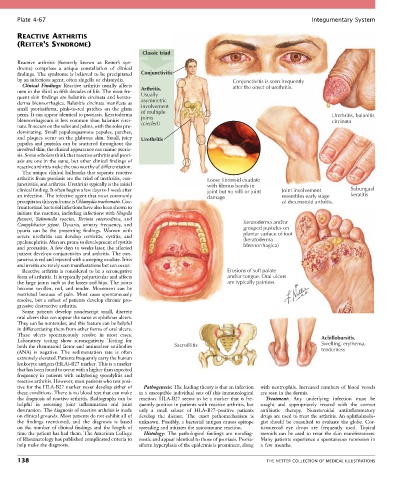
Plate 4-67                                                                                            Integumentary System

       REACTIVE ARTHRITIS
       (REITER’S SYNDROME)

                                                  Classic triad
       Reactive  arthritis  (formerly  known  as  Reiter’s  syn-
       drome)  comprises  a  unique  constellation  of  clinical
       findings. The syndrome is believed to be precipitated   Conjunctivitis
       by an infectious agent, often shigella or chlamydia.                      Conjunctivitis is seen frequently
         Clinical  Findings:  Reactive  arthritis  usually  affects              after the onset of urethritis.
       men in the third to fifth decades of life. The most fre-  Arthritis.
       quent skin findings are balanitis circinata and kerato-  Usually
       derma blennorrhagica. Balanitis circinata manifests as   asymmetric
       small  psoriasiform,  pink-to-red  patches  on  the  glans   involvement
       penis. It can appear identical to psoriasis. Keratoderma   of multiple                                       Urethritis, balanitis
       blennorrhagicum  is  less  common  than  balanitis  circi-  joints                                           circinata
       nata. It occurs on the soles and palms, with the soles pre-  (circled)
       dominating.  Small  papulosquamous  papules,  patches,
       and  plaques  occur  on  the  glabrous  skin.  Small,  juicy   Urethritis
       papules and pustules can be scattered throughout the
       involved skin; the clinical appearance can mimic psoria-
       sis. Some scholars think that reactive arthritis and psori-
       asis are one in the same, but other clinical findings of
       reactive arthritis make the two worthy of differentiation.
         The unique clinical hallmarks that separate reactive
       arthritis from psoriasis are the triad of urethritis, con-        Loose fibrinoid exudate
       junctivitis, and arthritis. Urethritis typically is the initial   with fibrous bands in
       clinical finding. It often begins a few days to 1 week after      joint but no villi or joint  Joint involvement   Subungual
       an infection. The infective agent that most commonly              damage                   resembles early stage   keratitis
       precipitates this syndrome is Chlamydia trachomatis. Gas-                                  of rheumatoid arthritis.
       trointestinal bacterial infections have also been shown to
       initiate the reaction, including infections with Shigella
       flexneri,  Salmonella  species,  Yersinia  enterocolitica,  and
       Campylobacter  jejuni.  Dysuria,  urinary  frequency,  and                    Keratoderma and/or
       pyuria  can  be  the  presenting  findings.  Women  with                      grouped pustules on
       severe  urethritis  can  develop  cervicitis,  cystitis,  and                 plantar surface of foot
       pyelonephritis. Men are prone to development of cystitis                      (keratoderma
       and prostatitis. A few days to weeks later, the affected                      blennorrhagica)
       patient develops conjunctivitis and arthritis. The con-
       junctiva is red and injected with a weeping exudate. Iritis
       and uveitis are rarely seen manifestations but can occur.
         Reactive arthritis is considered to be a seronegative                  Erosions of soft palate
       form of arthritis. It is typically polyarticular and affects             and/or tongue. Oral ulcers
       the large joints such as the knees and hips. The joints                  are typically painless.
       become  swollen,  red,  and  tender.  Movement  can  be
       restricted  because  of  pain.  Most  cases  spontaneously
       resolve, but a subset of patients develop chronic pro-
       gressive destructive arthritis.
         Some  patients  develop  nondescript  small,  discrete
       oral ulcers that can appear the same as aphthous ulcers.
       They can be nontender, and this feature can be helpful
       in differentiating them from other forms of oral ulcers.
       These  ulcers  spontaneously  resolve  in  most  cases.                                                  Achillobursitis.
       Laboratory  testing  show  seronegativity.  Testing  for                                                 Swelling, erythema,
       both the rheumatoid factor and antinuclear antibodies   Sacroiliitis                                     tenderness
       (ANA)  is  negative.  The  sedimentation  rate  is  often
       extremely elevated. Patients frequently carry the human
       leukocyte antigen (HLA)-B27 marker. This is a marker
       that has been found to occur with a higher than expected
       frequency  in  patients  with  ankylosing  spondylitis  and
       reactive arthritis. However, most patients who test posi-
       tive for the HLA-B27 marker never develop either of   Pathogenesis: The leading theory is that an infection   with  neutrophils.  Increased  numbers  of  blood  vessels
       these conditions. There is no blood test that can make   in a susceptible individual sets off this immunological   are seen in the dermis.
       the diagnosis of reactive arthritis. Radiographs can be   reaction. HLA-B27 seems to be a marker that is fre-  Treatment:  Any  underlying  infection  must  be
       helpful  in  assessing  joint  inflammation  and  joint   quently positive in patients with reactive arthritis, but   sought  and  appropriately  treated  with  the  correct
       destruction. The diagnosis of reactive arthritis is made   only  a  small  subset  of  HLA-B27–positive  patients   antibiotic  therapy.  Nonsteroidal  antiinflammatory
       on clinical grounds. Most patients do not exhibit all of   develop  the  disease.  The  exact  pathomechanism  is   drugs are used to treat the arthritis. An ophthalmolo-
       the  findings  mentioned,  and  the  diagnosis  is  based     unknown. Possibly, a bacterial antigen causes epitope   gist  should  be  consulted  to  evaluate  the  globe.  Cor-
       on  the  number  of  clinical  findings  and  the  length  of   spreading and initiates the autoimmune reaction.  ticosteroid  eye  drops  are  frequently  used.  Topical
       time the patient has had them. The American College   Histology:  The  pathological  findings  are  nondiag-  steroids  can  be  used  to  treat  the  skin  manifestations.
       of Rheumatology has published complicated criteria to   nostic and appear identical to those of psoriasis. Psoria-  Many patients experience a spontaneous remission in
       help make the diagnosis.                  siform hyperplasia of the epidermis is prominent, along   a  few  months.

       138                                                                                   THE NETTER COLLECTION OF MEDICAL ILLUSTRATIONS

