


Page 97 - The Netter Collection of Medical Illustrations - Integumentary System_ Volume 4 ( PDFDrive )
P. 97
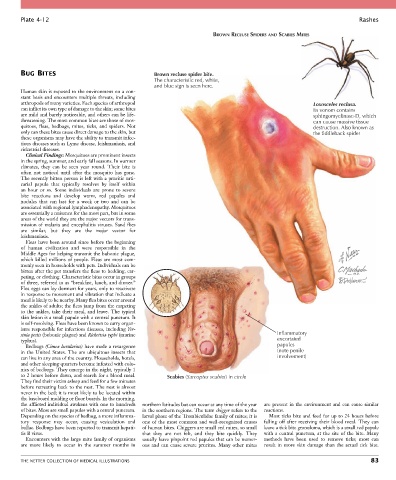
Plate 4-12                                                                                                           Rashes

                                                                           BROWN RECLUSE SPIDERS AND SCABIES MITES


        BUG BITES                                     Brown recluse spider bite.
                                                      The characteristic red, white,
                                                      and blue sign is seen here.
        Human skin is exposed to the environment on a con-
        stant basis and encounters multiple threats, including
        arthropods of many varieties. Each species of arthropod                                              Loxosceles reclusa.
        can inflict its own type of damage to the skin; some bites                                           Its venom contains
        are mild and barely noticeable, and others can be life-                                              sphingomyelinase-D, which
        threatening. The most common bites are those of mos-                                                 can cause massive tissue
        quitoes,  fleas,  bedbugs,  mites,  ticks,  and  spiders.  Not                                       destruction. Also known as
        only can these bites cause direct damage to the skin, but                                            the fiddleback spider
        these organisms may have the ability to transmit infec-
        tious diseases such as Lyme disease, leishmaniasis, and
        rickettsial diseases.
          Clinical Findings: Mosquitoes are prominent insects
        in the spring, summer, and early fall seasons. In warmer
        climates,  they  can  be  seen  year  round.  Their  bite  is
        often  not  noticed  until  after  the  mosquito  has  gone.
        The recently bitten person is left with a pruritic urti-
        carial  papule  that  typically  resolves  by  itself  within
        an  hour  or  so.  Some  individuals  are  prone  to  severe
        bite  reactions  and  develop  warm,  red  papules  and
        nodules  that  can  last  for  a  week  or  two  and  can  be
        associated with regional lymphadenopathy. Mosquitoes
        are essentially a nuisance for the most part, but in some
        areas of the world they are the major vectors for trans-
        mission of malaria and encephalitis viruses. Sand flies
        are  similar,  but  they  are  the  major  vector  for
        leishmaniasis.
          Fleas have been around since before the beginning
        of  human  civilization  and  were  responsible  in  the
        Middle Ages for helping transmit the bubonic plague,
        which  killed  millions  of  people.  Fleas  are  most  com-
        monly seen in households with pets. Individuals can be
        bitten after the pet transfers the fleas to bedding, car-
        peting, or clothing. Characteristic bites occur in groups
        of three, referred to as “breakfast, lunch, and dinner.”
        Flea eggs can lay dormant for years, only to reactivate
        in response to movement and vibration that indicate a
        meal is likely to be nearby. Many flea bites occur around
        the ankles of adults; the fleas jump from the carpeting
        to the ankles, take their meal, and leave. The typical
        skin lesion is a small papule with a central punctum. It
        is self-resolving. Fleas have been known to carry organ-
        isms responsible for infectious diseases, including Yer-
        sinia pestis (bubonic plague) and Rickettsia typhi (murine                               Inflammatory
        typhus).                                                                                 excoriated
          Bedbugs (Cimex lectularius) have made a resurgence                                     papules
        in  the  United  States.  The  are  ubiquitous  insects  that                            (note penile
        can live in any area of the country. Households, hotels,                                 involvement)
        and other sleeping quarters become infested with colo-
        nies of bedbugs. They emerge in the night, typically 1
        to 2 hours before dawn, and search for a blood meal.   Scabies (Sarcoptes scabiei) in circle
        They find their victim asleep and feed for a few minutes
        before retreating back to the nest. The nest is almost
        never in the bed; it is most likely to be located within
        the baseboard molding or floor boards. In the morning,
        the afflicted individual awakens with one to hundreds   northern latitudes but can occur at any time of the year   are present in the environment and can cause similar
        of bites. Most are small papules with a central punctum.   in the southern regions. The term chigger refers to the   reactions.
        Depending on the species of bedbug, a more inflamma-  larval phase of the Trombiculidae family of mites; it is   Most ticks bite and feed for up to 24 hours before
        tory  response  may  occur,  causing  vesiculation  and   one of the most common and well-recognized causes   falling off after receiving their blood meal. They can
        bullae. Bedbugs have been reported to transmit hepati-  of human bites. Chiggers are small red mites, so small   leave a tick bite granuloma, which is a small red papule
        tis B virus.                              that  they  are  not  felt,  and  they  bite  quickly.  They   with a central punctum, at the site of the bite. Many
          Encounters with the large mite family of organisms   usually leave pinpoint red papules that can be numer-  methods  have  been  used  to  remove  ticks;  most  can
        are  more  likely  to  occur  in  the  summer  months  in   ous  and  can  cause  severe  pruritus.  Many  other  mites   result  in  more  skin  damage  than  the  actual  tick  bite.


        THE NETTER COLLECTION OF MEDICAL ILLUSTRATIONS                                                                           83

