


Page 96 - The Netter Collection of Medical Illustrations - Integumentary System_ Volume 4 ( PDFDrive )
P. 96
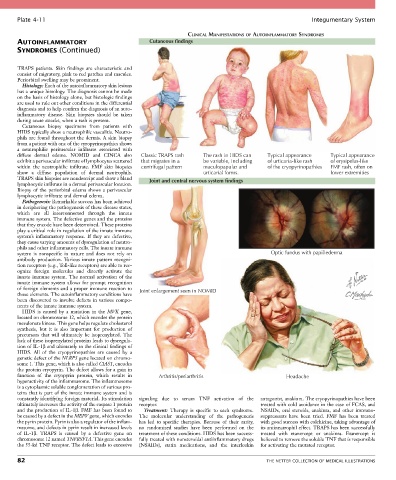
Plate 4-11                                                                                            Integumentary System

                                                                  CLINICAL MANIFESTATIONS OF AUTOINFLAMMATORY SYNDROMES
       AUTOINFLAMMATORY                              Cutaneous findings
       SYNDROMES (Continued)


       TRAPS  patients.  Skin  findings  are  characteristic  and
       consist of migratory, pink to red patches and macules.
       Periorbital swelling may be prominent.
         Histology: Each of the autoinflammatory skin lesions
       has a unique histology. The diagnosis cannot be made
       on the basis of histology alone, but histologic findings
       are used to rule out other conditions in the differential
       diagnosis and to help confirm the diagnosis of an auto-
       inflammatory  disease.  Skin  biopsies  should  be  taken
       during acute attacks, when a rash is present.
         Cutaneous  biopsy  specimens  from  patients  with
       HIDS typically show a neutrophilic vasculitis. Neutro-
       phils are found throughout the dermis. A skin biopsy
       from a patient with one of the cyropyrinopathies shows
       a  neutrophilic  perivascular  infiltrate  associated  with
       diffuse  dermal  edema.  NOMID  and  CINCA  also   Classic TRAPS rash  The rash in HIDS can  Typical appearance  Typical appearance
       exhibit a perivascular infiltrate of lymphocytes scattered   that migrates in a  be variable, including  of urticaria-like rash  of erysipelas-like
       within  the  neutrophilic  infiltrate.  FMF  skin  biopsies   centrifugal pattern  maculopapular and  of the cryopyrinopathies  FMF rash, often on
       show  a  diffuse  population  of  dermal  neutrophils.          urticarial forms.                           lower extremities
       TRAPS skin biopsies are nondescript and show a bland   Joint and central nervous system findings
       lymphocytic infiltrate in a dermal perivascular location.
       Biopsy  of  the  periorbital  edema  shows  a  perivascular
       lymphocytic infiltrate and dermal edema.
         Pathogenesis: Remarkable success has been achieved
       in deciphering the pathogenesis of these disease states,
       which  are  all  interconnected  through  the  innate
       immune system. The defective genes and the proteins
       that they encode have been determined. These proteins
       play a critical role in regulation of the innate immune
       system’s inflammatory response. If they are defective,
       they cause varying amounts of dysregulation of neutro-
       phils and other inflammatory cells. The innate immune
       system  is  nonspecific  in  nature  and  does  not  rely  on                           Optic fundus with papillederma
       antibody  production.  Various  innate  pattern  recogni-
       tion receptors (e.g., Toll-like receptors) are able to rec-
       ognize  foreign  molecules  and  directly  activate  the
       innate  immune  system.  The  normal  activation  of  the
       innate immune system allows for prompt recognition
       of foreign elements and a proper immune reaction to   Joint enlargement seen in NOMID
       those elements. The autoinflammatory conditions have
       been discovered to involve defects in various compo-
       nents of the innate immune system.
         HIDS  is  caused  by  a  mutation  in  the  MVK  gene,
       located on chromosome 12, which encodes the protein
       mevalonate kinase. This gene helps regulate cholesterol
       synthesis,  but  it  is  also  important  for  production  of
       precursors  that  will  ultimately  be  isoprenylated.  The
       lack of these isoprenylated proteins leads to dysregula-
       tion of IL-1β and ultimately to the clinical findings of
       HIDS.  All  of  the  cryopyrinopathies  are  caused  by  a
       genetic defect of the NLRP3 gene located on chromo-
       some 1. This gene, which is also called CIAS1, encodes
       the protein cryopyrin. The defect allows for a gain in
       function  of  the  cryopyrin  protein,  which  results  in   Arthritis/periarthritis         Headache
       hyperactivity of the inflammasome. The inflammasome
       is a cytoplasmic soluble conglomeration of various pro-
       teins that is part of the innate immune system and is
       constantly identifying foreign material. Its stimulation   signaling  due  to  serum  TNF  activation  of  the   antagonist, anakinra. The cryopyrinopathies have been
       ultimately increases the activity of the caspase 1 protein   receptor.              treated with cold avoidance in the case of FCAS, and
       and the production of IL-1β. FMF has been found to   Treatment:  Therapy  is  specific  to  each  syndrome.   NSAIDs,  oral  steroids,  anakinra,  and  other  immuno-
       be caused by a defect in the MEFV gene, which encodes   The  molecular  understanding  of  the  pathogenesis     suppressants  have  been  tried.  FMF  has  been  treated
       the pyrin protein. Pyrin is also a regulator of the inflam-  has  led  to  specific  therapies.  Because  of  their  rarity,     with good success with colchicine, taking advantage of
       masome, and defects in pyrin result in increased levels   no  randomized  studies  have  been  performed  on  the   its antineutrophil effect. TRAPS has been successfully
       of  IL-1β.  TRAPS  is  caused  by  a  defective  gene  on   treatment of these conditions. HIDS has been success-  treated  with  etanercept  or  anakinra.  Etanercept  is
       chromosome 12 named TNFRSF1A. This gene encodes   fully treated with nonsteroidal antiinflammatory drugs   believed to remove the soluble TNF that is responsible
       the 55-kd TNF receptor. The defect leads to excessive   (NSAIDs),  statin  medications,  and  the  interleukin   for activating the mutated receptor.

       82                                                                                    THE NETTER COLLECTION OF MEDICAL ILLUSTRATIONS

