


Page 281 - ACCCN's Critical Care Nursing
P. 281
258  P R I N C I P L E S   A N D   P R A C T I C E   O F   C R I T I C A L   C A R E


                     N               N              N           N          S          S        S          S


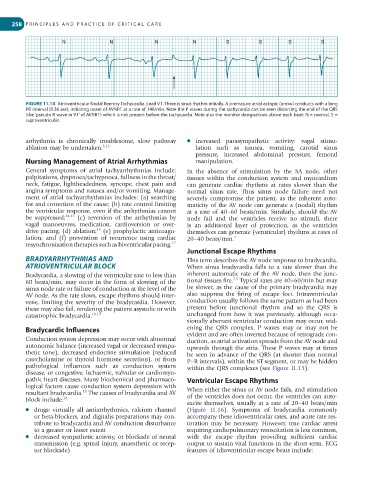
         FIGURE 11.14  Atrioventricular Nodal Reentry Tachycardia. Lead V1. There is sinus rhythm initially. A premature atrial ectopic (arrow) conducts with a long
         PR interval (0.36 sec), initiating onset of AVNRT at a rate of 140/min. Note the P waves during the tachycardia can be seen distorting the end of the QRS
         (the ‘pseudo R wave in V1’ of AVNRT) which is not present before the tachycardia. Note also the monitor designations above each beat: N = normal, S =
         supraventricular.


         arrhythmia  is  chronically  troublesome,  slow  pathway   ●  increased  parasympathetic  activity:  vagal  stimu-
         ablation may be undertaken. 5,13                        lation  such  as  nausea,  vomiting,  carotid  sinus
                                                                 pressure,  increased  abdominal  pressure,  femoral
         Nursing Management of Atrial Arrhythmias                manipulation.
         General  symptoms  of  atrial  tachyarrhythmias  include:   In  the  absence  of  stimulation  by  the  SA  node,  other
         palpitations, dyspnoea/tachypnoea, fullness in the throat/  tissues  within  the  conduction  system  and  myocardium
         neck,  fatigue,  lightheadedness,  syncope,  chest  pain  and   can  generate  cardiac  rhythms  at  rates  slower  than  the
         angina symptoms and nausea and/or vomiting. Manage-  normal  sinus  rate.  Thus  sinus  node  failure  need  not
         ment  of  atrial  tachyarrhythmias  includes:  (a)  searching   severely  compromise  the  patient,  as  the  inherent  auto-
         for and correction of the cause; (b) rate control limiting   maticity of the AV node can generate a (nodal) rhythm
         the ventricular response, even if the arrhythmias cannot   at  a  rate  of  40–60  beats/min.  Similarly,  should  the  AV
         be  suppressed; 14,15   (c)  reversion  of  the  arrhythmias  by   node  fail  and  the  ventricles  receive  no  stimuli,  there
         vagal  manoeuvres,  medication,  cardioversion  or  over-  is  an  additional  layer  of  protection,  as  the  ventricles
                                 16
         drive pacing; (d) ablation;  (e) prophylactic anticoagu-  themselves can generate (ventricular) rhythms at rates of
         lation;  and  (f)  prevention  of  recurrence  using  cardiac   20–40 beats/min. 7
         resynchronisation therapies such as biventricular pacing. 17
                                                              Junctional Escape Rhythms
         BRADYARRHYTHMIAS AND                                 This term describes the AV node response to bradycardia.
         ATRIOVENTRICULAR BLOCK                               When  sinus  bradycardia  falls  to  a  rate  slower  than  the
         Bradycardia, a slowing of the ventricular rate to less than   inherent automatic rate of the AV node, then the junc-
                                                                             7,9
         60 beats/min, may occur in the form of slowing of the   tional tissues fire.  Typical rates are 40–60/min but may
         sinus node rate or failure of conduction at the level of the   be slower, as the cause of the primary bradycardia may
         AV node. As the rate slows, escape rhythms should inter-  also  suppress  the  firing  of  escape  foci.  In traventricular
         vene, limiting the severity of the bradycardia. However,   conduction usually follows the same pattern as had been
         these may also fail, rendering the patient asystolic or with   present  before  junctional  rhythm  and  so  the  QRS  is
         catastrophic bradycardia. 18,19                      unchanged from how it was previously, although occa-
                                                              sionally aberrant ventricular con duction may occur, wid-
         Bradycardic Influences                               ening  the  QRS  complex.  P  waves  may  or  may  not  be
         Conduction system depression may occur with abnormal   evident and are often inverted because of retrograde con-
                                                              duction, as atrial activation spreads from the AV node and
         autonomic balance (increased vagal or decreased sympa-  upwards through the atria. These P waves may at times
         thetic  tone),  decreased  endocrine  stimulation  (reduced   be seen in advance of the QRS (at shorter than normal
         catecholamine  or  thyroid  hormone  secretion),  or  from   P–R intervals), within the ST segment, or may be hidden
         pathological  influences  such  as  conduction  system   within the QRS complexes (see Figure 11.15).
         disease, or congestive, ischaemic, valvular or cardiomyo-
         pathic heart diseases. Many biochemical and pharmaco-  Ventricular Escape Rhythms
         logical factors cause conduction system depression with
                            18
         resultant bradycardia.  The causes of bradycardia and AV   When either the sinus or AV node fails, and stimulation
         block include: 18                                    of the ventricles does not occur, the ventricles can auto-
                                                              excite themselves, usually at a rate of 20–40 beats/min
         ●  drugs: virtually all antiarrhythmics, calcium channel   (Figure  11.16).  Symptoms  of  bradycardia  commonly
            or beta-blockers, and digitalis preparations may con-  accompany these idioventricular rates, and acute rate res-
            tribute to bradycardia and AV conduction disturbance   toration  may  be  necessary.  However,  true  cardiac  arrest
            to a greater or lesser extent                     requiring cardiopulmonary resuscitation is less common,
         ●  decreased sympathetic activity, or blockade of neural   with  the  escape  rhythm  providing  sufficient  cardiac
            transmission (e.g. spinal injury, anaesthetic or recep-  output to sustain vital functions in the short term. ECG
            tor blockade)                                     features of idioventricular escape beats include:

