


Page 287 - ACCCN's Critical Care Nursing
P. 287
264  P R I N C I P L E S   A N D   P R A C T I C E   O F   C R I T I C A L   C A R E


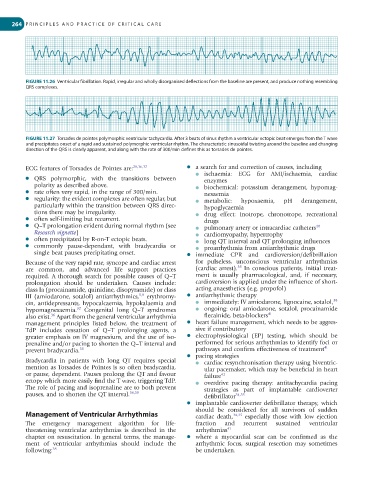
         FIGURE 11.26  Ventricular fibrillation. Rapid, irregular and wholly disorganised deflections from the baseline are present, and produce nothing resembling
         QRS complexes.


         FIGURE 11.27  Torsades de pointes polymorphic ventricular tachycardia. After 3 beats of sinus rhythm a ventricular ectopic beat emerges from the T wave
         and precipitates onset of a rapid and sustained polymorphic ventricular rhythm. The characteristic sinusoidal twisting around the baseline and changing
         direction of the QRS is clearly apparent, and along with the rate of 300/min defines this as torsades de pointes.


         ECG features of Torsades de Pointes are: 28,36,37    ●  a search for and correction of causes, including
                                                                 ●  ischaemia:  ECG  for  AMI/ischaemia,  cardiac
         ●  QRS  polymorphic,  with  the  transitions  between      enzymes
            polarity as described above.                         ●  biochemical:  potassium  derangement,  hypomag-
         ●  rate often very rapid, in the range of 300/min.         nesaemia
         ●  regularity: the evident complexes are often regular, but   ●  metabolic:   hypoxaemia,   pH   derangement,
            particularly within the transition between QRS direc-   hypoglycaemia
            tions there may be irregularity.                     ●  drug  effect:  inotrope,  chronotrope,  recreational
         ●  often self-limiting but recurrent.                      drugs
         ●  Q–T prolongation evident during normal rhythm (see   ●  pulmonary artery or intracardiac catheters 40
            Research vignette)                                   ●  cardiomyopathy, hypertrophy
         ●  often precipitated by R-on-T ectopic beats.          ●  long QT interval and QT prolonging influences
         ●  commonly  pause-dependant,  with  bradycardia  or    ●  proarrhythmia from antiarrhythmic drugs
            single beat pauses precipitating onset.           ●  immediate  CPR  and  cardioversion/defibrillation
         Because of the very rapid rate, syncope and cardiac arrest   for  pulseless,  unconscious  ventricular  arrhythmias
                                                                               38
         are  common,  and  advanced  life  support  practices   (cardiac arrest).  In conscious patients, initial treat-
         required. A thorough search for possible causes of Q–T   ment  is  usually  pharmacological,  and,  if  necessary,
         prolongation  should  be  undertaken.  Causes  include:   cardioversion is applied under the influence of short-
         class Ia (procainamide, quinidine, disopyramide) or class   acting anaesthetics (e.g. propofol)
                                               5,9
         III  (amiodarone,  sotalol)  antiarrhythmics,   erythromy-  ●  antiarrhythmic therapy
         cin,  antidepressants,  hypocalcaemia,  hypokalaemia  and   ●  immediately: IV amiodarone, lignocaine, sotalol, 38
                          32
         hypomagnesaemia.   Congenital  long  Q–T  syndromes     ●  ongoing: oral amiodarone, sotalol, procainamide
                  36
         also exist.  Apart from the general ventricular arrhythmia   flecainide, beta-blockers 41
         management  principles  listed  below,  the  treatment  of   ●  heart failure management, which needs to be aggres-
         TdP  includes  cessation  of  Q–T  prolonging  agents,  a   sive if contributory
         greater emphasis on IV magnesium, and the use of iso-  ●  electrophysiological  (EP)  testing,  which  should  be
         prenaline and/or pacing to shorten the Q–T interval and   performed for serious arrhythmias to identify foci or
         prevent bradycardia. 38                                 pathways and confirm effectiveness of treatment 41
                                                              ●  pacing strategies
         Bradycardia  in  patients  with  long  QT  requires  special   ●  cardiac resynchronisation therapy using biventric-
         mention as Torsades de Pointes is so often bradycardia,    ular pacemaker, which may be beneficial in heart
         or pause, dependent. Pauses prolong the QT and favour      failure 42
         ectopy which more easily find the T wave, triggering TdP.   ●  overdrive  pacing  therapy:  antitachycardia  pacing
         The role of pacing and isoprenaline are to both prevent    strategies  as  part  of  implantable  cardioverter
         pauses, and to shorten the QT interval. 36,39              defibrillator 34,35
                                                              ●  implantable cardioverter defibrillator therapy, which
                                                                 should  be  considered  for  all  survivors  of  sudden
         Management of Ventricular Arrhythmias                   cardiac  death, 34,35   especially  those  with  low  ejection
         The  emergency  management  algorithm  for  life-       fraction   and   recurrent   sustained   ventricular
         threatening  ventricular  arrhythmias  is  described  in  the   arrhythmias 41
         chapter on resuscitation. In general terms, the manage-  ●  where  a  myocardial  scar  can  be  confirmed  as  the
         ment  of  ventricular  arrhythmias  should  include  the   arrhythmic  focus,  surgical  resection  may  sometimes
         following: 38                                           be undertaken.

