


Page 289 - ACCCN's Critical Care Nursing
P. 289
266  P R I N C I P L E S   A N D   P R A C T I C E   O F   C R I T I C A L   C A R E


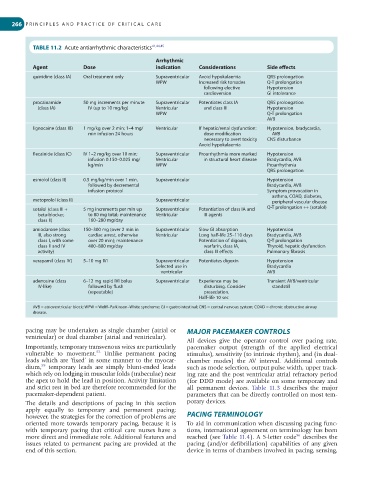
            TABLE 11.2  Acute antiarrhythmic characteristics 41,44,45

                                                    Arrhythmic
            Agent           Dose                    indication    Considerations        Side effects
            quinidine (class IA)  Oral treatment only  Supraventricular  Avoid hypokalaemia  QRS prolongation
                                                    WPW           Increased risk torsades   Q-T prolongation
                                                                    following elective   Hypotension
                                                                    cardioversion       GI intolerance
            procainamide    50 mg increments per minute   Supraventricular  Potentiates class IA    QRS prolongation
             (class IA)       IV (up to 10 mg/kg)   Ventricular     and class III       Hypotension
                                                    WPW                                 Q-T prolongation
                                                                                        AVB
            lignocaine (class IB)  1 mg/kg over 2 min; 1–4 mg/  Ventricular  If hepatic/renal dysfunction:   Hypotension, bradycardia,
                              min infusion 24 hours                 dose modification     AVB
                                                                    necessary to avert toxicity  CNS disturbance
                                                                  Avoid hypokalaemia
            flecainide (class IC)  IV 1–2 mg/kg over 10 min;   Supraventricular  Proarrhythmia more marked   Hypotension
                              infusion 0.150–0.025 mg/  Ventricular  in structural heart disease  Bradycardia, AVB
                              kg/min                WPW                                 Proarrhythmia
                                                                                        QRS prolongation
            esmolol (class II)  0.5 mg/kg/min over 1 min,   Supraventricular            Hypotension
                              followed by decremental                                   Bradycardia, AVB
                              infusion protocol                                         Symptom provocation in
                                                                                          asthma, COAD, diabetes,
            metoprolol (class II)                   Supraventricular                      peripheral vascular disease
            sotalol (class III +   5 mg increments per min up   Supraventricular  Potentiation of class IA and   Q-T prolongation ++ (sotalol)
             beta-blocker,    to 80 mg total; maintenance   Ventricular  III agents
             class II)        160–280 mg/day
            amiodarone (class   150–300 mg (over 2 min in   Supraventricular  Slow GI absorption  Hypotension
             III, also strong   cardiac arrest, otherwise   Ventricular  Long half-life 25–110 days  Bradycardia, AVB
             class I, with some   over 20 min); maintenance       Potentiation of digoxin,   Q-T prolongation
             class II and IV   400–800 mg/day                       warfarin, class IA,    Thyroid, hepatic dysfunction
             activity)                                              class III effects   Pulmonary fibrosis
            verapamil (class IV)  5–10 mg IVI       Supraventricular  Potentiates digoxin  Hypotension
                                                    Selected use in                     Bradycardia
                                                      ventricular                       AVB
            adenosine (class   6–12 mg rapid IVI bolus   Supraventricular  Experience may be   Transient AVB/ventricular
             IV-like)         followed by flush                     disturbing. Consider   standstill
                              (repeatable)                          presedation.
                                                                  Half-life 10 sec
            AVB = atrioventricular block; WPW = Wolff–Parkinson–White syndrome; GI = gastrointestinal; CNS = central nervous system; COAD = chronic obstructive airway
            disease.


         pacing may be undertaken as single chamber (atrial or   MAJOR PACEMAKER CONTROLS
         ventricular) or dual chamber (atrial and ventricular).
                                                              All  devices  give  the  operator  control  over  pacing  rate,
         Importantly, temporary transvenous wires are particularly   pacemaker  output  (strength  of  the  applied  electrical
                                 53
         vulnerable  to  movement.   Unlike  permanent  pacing   stimulus), sensitivity (to intrinsic rhythm), and (in dual-
         leads which are ‘fixed’ in some manner to the myocar-  chamber  modes)  the  AV  interval.  Additional  controls
               55
         dium,   temporary  leads  are  simply  blunt-ended  leads   such as mode selection, output pulse width, upper track-
         which rely on lodging in muscular folds (trabeculae) near   ing rate and the post ventricular atrial refractory period
         the apex to hold the lead in position. Activity limitation   (for DDD mode) are available on some temporary and
         and strict rest in bed are therefore recommended for the   all  permanent  devices.  Table  11.3  describes  the  major
         pacemaker-dependent patient.                         parameters that can be directly controlled on most tem-
         The  details  and  descriptions  of  pacing  in  this  section   porary devices.
         apply  equally  to  temporary  and  permanent  pacing;
         however, the strategies for the correction of problems are   PACING TERMINOLOGY
         oriented  more  towards  temporary  pacing,  because  it  is   To aid in communication when discussing pacing func-
         with  temporary  pacing  that  critical  care  nurses  have  a   tions, international agreement on terminology has been
                                                                                                  56
         more direct and immediate role. Additional features and   reached (see Table 11.4). A 5-letter code  describes the
         issues  related  to  permanent  pacing  are  provided  at  the   pacing  (and/or  defibrillation)  capabilities  of  any  given
         end of this section.                                 device in terms of chambers involved in pacing, sensing,

