


Page 1349 - Hematology_ Basic Principles and Practice ( PDFDrive )
P. 1349
Chapter 73  The Pathologic Basis for the Classification of Non-Hodgkin and Hodgkin Lymphomas  1195


                          A A                       BB                         CC
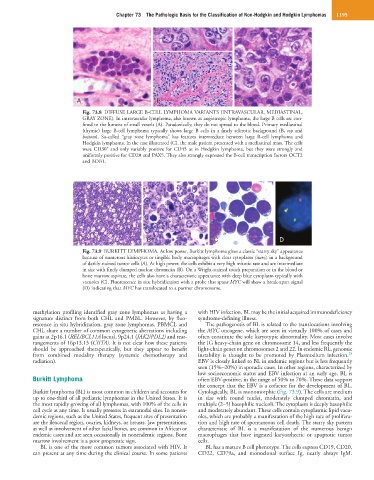
                            Fig. 73.8  DIFFUSE LARGE B-CELL LYMPHOMA VARIANTS (INTRAVASCULAR, MEDIASTINAL,
                            GRAY ZONE). In intravascular lymphoma, also known as angiotropic lymphoma, the large B cells are con-
                            fined to the lumens of small vessels (A). Paradoxically, they do not spread to the blood. Primary mediastinal
                            (thymic)  large  B-cell  lymphoma  typically  shows  large  B  cells  in  a  finely  sclerotic  background  (B,  top  and
                            bottom).  So-called  “gray  zone  lymphoma”  has  features  intermediate  between  large  B-cell  lymphoma  and
                            Hodgkin lymphoma. In the case illustrated (C), the male patient presented with a mediastinal mass. The cells
                                    +
                            were CD30   and  only  variably positive for CD45 as in Hodgkin lymphoma, but they were strongly and
                            uniformly positive for CD20 and PAX5. They also strongly expressed the B-cell transcription factors OCT2
                            and BOB1.


                          A A                    B B                   CC                   D

                            Fig. 73.9  BURKITT LYMPHOMA. At low power, Burkitt lymphoma gives a classic “starry sky” appearance
                            because of numerous histiocytes or tingible body macrophages with clear cytoplasm (stars), in a background
                            of darkly stained tumor cells (A). At high power, the cells exhibit a very high mitotic rate and are intermediate
                            in size with finely clumped nuclear chromatin (B). On a Wright-stained touch preparation or in the blood or
                            bone marrow aspirate, the cells also have a characteristic appearance with deep blue cytoplasm typically with
                            vacuoles (C). Fluorescence in situ hybridization with a probe that spans MYC will show a break-apart signal
                            (D) indicating that MYC has translocated to a partner chromosome.


            methylation  profiling  identified  gray  zone  lymphomas  as  having  a   with HIV infection, BL may be the initial acquired immunodeficiency
            signature  distinct  from  both  CHL  and  PMBL.  However,  by  fluo-  syndrome-defining illness.
            rescence in situ hybridization, gray zone lymphomas, PBMCL and   The pathogenesis of BL is related to the translocations involving
            CHL share a number of common cytogenetic aberrations including   the MYC oncogene, which are seen in virtually 100% of cases and
            gains at 2p16.1 (REL/BCL11A locus), 9p24.1 (JAK2/PDL2) and rear-  often constitute the sole karyotypic abnormality. Most cases involve
            rangements of 16p13.13 (CIITA). It is not clear how these patients   the IG heavy-chain gene on chromosome 14, and less frequently the
            should  be  approached  therapeutically,  but  they  appear  to  benefit   light-chain genes on chromosomes 2 and 22. In endemic BL, genomic
                                                                                                                   28
            from  combined  modality  therapy  (systemic  chemotherapy  and     instability  is  thought  to  be  promoted  by  Plasmodium  infection.
            radiation).                                           EBV is closely linked to BL in endemic regions but is less frequently
                                                                  seen (15%–20%) in sporadic cases. In other regions, characterized by
                                                                  low socioeconomic status and EBV infection at an early age, BL is
            Burkitt Lymphoma                                      often EBV-positive, in the range of 50% to 70%. These data support
                                                                  the concept that the EBV is a cofactor for the development of BL.
            Burkitt lymphoma (BL) is most common in children and accounts for   Cytologically, BL is monomorphic (Fig. 73.9). The cells are medium
            up to one-third of all pediatric lymphomas in the United States. It is   in  size  with  round  nuclei,  moderately  clumped  chromatin,  and
            the most rapidly growing of all lymphomas, with 100% of the cells in   multiple (2–5) basophilic nucleoli. The cytoplasm is deeply basophilic
            cell cycle at any time. It usually presents in extranodal sites. In nonen-  and moderately abundant. These cells contain cytoplasmic lipid vacu-
            demic regions, such as the United States, frequent sites of presentation   oles, which are probably a manifestation of the high rate of prolifera-
            are the ileocecal region, ovaries, kidneys, or breasts. Jaw presentations,   tion and high rate of spontaneous cell death. The starry sky pattern
            as well as involvement of other facial bones, are common in African or   characteristic  of  BL  is  a  manifestation  of  the  numerous  benign
            endemic cases and are seen occasionally in nonendemic regions. Bone   macrophages  that  have  ingested  karyorrhectic  or  apoptotic  tumor
            marrow involvement is a poor prognostic sign.         cells.
              BL is one of the more common tumors associated with HIV. It   BL has a mature B cell phenotype. The cells express CD19, CD20,
            can present at any time during the clinical course. In some patients   CD22,  CD79a,  and  monoclonal  surface  Ig,  nearly  always  IgM.

