


Page 1350 - Hematology_ Basic Principles and Practice ( PDFDrive )
P. 1350
1196   Part VII  Hematologic Malignancies


                       A A


                       B B              C C                   D D    E
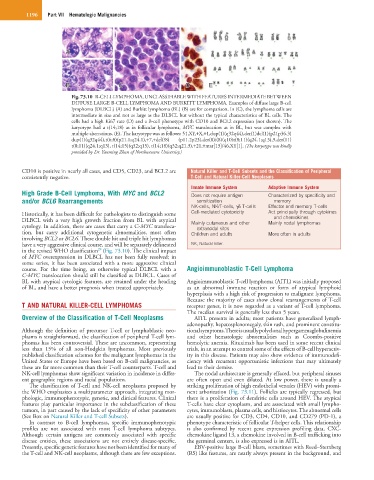
                        Fig. 73.10  B-CELL LYMPHOMA, UNCLASSIFIABLE WITH FEATURES INTERMEDIATE BETWEEN
                        DIFFUSE LARGE B-CELL LYMPHOMA AND BURKITT LYMPHOMA. Examples of diffuse large B-cell
                        lymphoma (DLBCL) (A) and Burkitt lymphoma (BL) (B) are for comparison. In (C), the lymphoma cells are
                        intermediate in size and not as large as the DLBCL but without the typical characteristics of BL cells. The
                        cells had a high Ki67 rate (D) and a B-cell phenotype with CD10 and BCL2 expression (not shown). The
                        karyotype  had  a  t(14;18)  as  in  follicular  lymphoma,  MYC  translocation  as  in  BL,  but  was  complex  with
                        multiple aberrations. (E). The karyotype was as follows: 51,XY,+X,+1,dup(1)(q32q44),der(1)del(1)(p21p36.3)
                        dup(1)(q32q44),t(6;8)(p21.1;q24.1),+7,+del(?8)   (p11.2p23),der(8)i(8)(q10)t(8;11)(q24.1;q13),9,der(11)
                        t(8;11)(q24.1;q13), t(14;15)(q32;q15), t(14;18)(q32;q21.3),+21,+mar[13]/46,XY[1]. (The karyotype was kindly
                        provided by Dr. Yanming Zhan of Northwestern University.)


        CD10 is positive in nearly all cases, and CD5, CD23, and BCL2 are   Natural Killer and T-Cell Subsets and the Classification of Peripheral
        consistently negative.                                 T-Cell and Natural Killer-Cell Neoplasms
                                                                Innate Immune System     Adaptive Immune System
        High Grade B-Cell Lymphoma, With MYC and BCL2           Does not require antigen   Characterized by specificity and
        and/or BCL6 Rearrangements                               sensitization             memory
                                                                NK-cells, NK/T-cells, γδ T-cells  Effector and memory T-cells
        Historically, it has been difficult for pathologists to distinguish some   Cell-mediated cytotoxicity  Act principally through cytokines
                                                                                           and chemokines
        DLBCL  with  a  very  high  growth  fraction  from  BL  with  atypical   Mainly cutaneous and other   Mainly nodal lymphomas
        cytology. In addition, there are cases that carry a C-MYC transloca-  extranodal sites
        tion,  but  carry  additional  cytogenetic  abnormalities,  most  often   Children and adults  More often in adults
        involving BCL2 or BCL6. These double hit and triple hit lymphomas
        have a very aggressive clinical course, and will be separately delineated   NK, Natural killer.
                                 29
        in the revised WHO classification  (Fig. 73.10). The clinical impact
        of MYC overexpression in DLBCL has not been fully resolved; in
        some  series,  it  has  been  associated  with  a  more  aggressive  clinical
        course.  For  the  time  being,  an  otherwise  typical  DLBCL  with  a   Angioimmunoblastic T-Cell Lymphoma
        C-MYC translocation should still be classified as DLBCL. Cases of
        BL with atypical cytologic features, are retained under the heading   Angioimmunoblastic T-cell lymphoma (AITL) was initially proposed
        of BL, and have a better prognosis when treated appropriately.  as  an  abnormal  immune  reaction  or  form  of  atypical  lymphoid
                                                              hyperplasia with a high risk of progression to malignant lymphoma.
                                                              Because the majority of cases show clonal rearrangements of T-cell
        T AND NATURAL KILLER-CELL LYMPHOMAS                   receptor genes, it is now regarded as a variant of T-cell lymphoma.
                                                              The median survival is generally less than 5 years.
        Overview of the Classification of T-Cell Neoplasms       AITL presents in adults; most patients have generalized lymph-
                                                              adenopathy, hepatosplenomegaly, skin rash, and prominent constitu-
        Although  the  definition  of  precursor T-cell  or  lymphoblastic  neo-  tional symptoms. There is usually polyclonal hypergammaglobulinemia
        plasms is straightforward, the classification of peripheral T-cell lym-  and  other  hematologic  abnormalities  such  as  Coombs-positive
        phomas has been controversial. These are uncommon, representing   hemolytic anemia. Rituximab has been used in some recent clinical
        less  than  15%  of  all  non-Hodgkin  lymphomas.  Most  previously   trials, in an attempt to control some of the effects of B-cell hyperactiv-
        published classification schemes for the malignant lymphomas in the   ity in this disease. Patients may also show evidence of immunodefi-
        United States or Europe have been based on B-cell malignancies, as   ciency  with  recurrent  opportunistic  infections  that  may  ultimately
        these are far more common than their T-cell counterparts. T-cell and   lead to their demise.
        NK-cell lymphomas show significant variation in incidence in differ-  The nodal architecture is generally effaced, but peripheral sinuses
        ent geographic regions and racial populations.        are  often  open  and  even  dilated.  At  low  power,  there  is  usually  a
           The classification of T-cell and NK-cell neoplasms proposed by   striking proliferation of high endothelial venules (HEV) with promi-
        the WHO emphasizes a multiparameter approach, integrating mor-  nent arborization (Fig. 73.11). Follicles are typically regressed, but
        phologic, immunophenotypic, genetic, and clinical features. Clinical   there is a proliferation of dendritic cells around HEV. The atypical
        features play particular importance in the subclassification of these   T-cells have clear cytoplasm, and are associated with small lympho-
        tumors, in part caused by the lack of specificity of other parameters   cytes, immunoblasts, plasma cells, and histiocytes. The abnormal cells
        (See Box on Natural Killer and T-cell Subsets).       are usually positive for CD3, CD4, CD10, and CD279 (PD-1), a
           In  contrast  to  B-cell  lymphomas,  specific  immunophenotypic   phenotype characteristic of follicular T-helper cells. This relationship
        profiles  are  not  associated  with  most  T-cell  lymphoma  subtypes.   is  also  confirmed  by  recent  gene  expression  profiling  data.  CXC-
        Although  certain  antigens  are  commonly  associated  with  specific   chemokine ligand 13, a chemokine involved in B-cell trafficking into
        disease  entities,  these  associations  are  not  entirely  disease-specific.   the germinal centers, is also expressed is in AITL.
        Presently, specific genetic features have not been identified for many of   EBV-positive large B-cell blasts, sometimes with Reed–Sternberg
        the T-cell and NK-cell neoplasms, although there are few exceptions.  (RS) like features, are nearly always present in the background, and

