


Page 909 - Hematology_ Basic Principles and Practice ( PDFDrive )
P. 909
792    Part VII  Hematologic Malignancies


           A


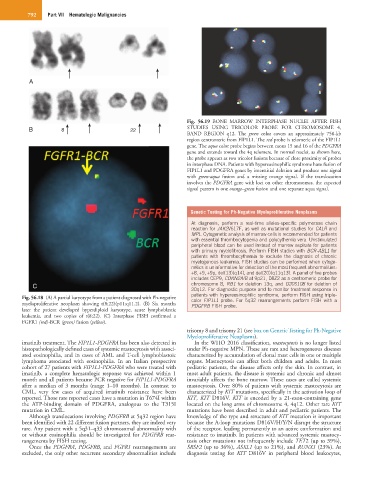
                                                              Fig.  56.19  BONE  MARROW  INTERPHASE  NUCLEI  AFTER  FISH
          B          8                      22                STUDIES  USING  TRICOLOR  PROBE  FOR  CHROMOSOME  4,
                                                              BAND  REGION  q12.  The  green  color  covers  an  approximately  750-kb
                                                              region centromeric from FIP1L1. The red probe is telomeric of the FIP1L1
                                                              gene. The aqua color probe begins between exons 15 and 16 of the PDGFRA
                                                              gene and extends toward the 4q telomere. In normal nuclei, as shown here,
                                                              the probe appears as two tricolor fusions because of close proximity of probes
                                                              in interphase DNA. Patients with hypereosinophilic syndrome have fusion of
                                                              FIP1L1 and PDGFRA genes by interstitial deletion and produce one signal
                                                              with  green-aqua  fusion  and  a  missing  orange  signal.  If  the  translocation
                                                              involves the PDGFRA gene with loci on other chromosomes, the expected
                                                              signal pattern is one orange–green fusion and one separate aqua signal.


                                                               Genetic Testing for Ph-Negative Myeloproliferative Neoplasms
                                                                At  diagnosis,  perform  a  real-time  alleles-specific  polymerase  chain
                                                                reaction for JAK2V617F, as well as mutational studies for CALR and
                                                                MPL. Cytogenetic analysis of marrow cells is recommended for patients
                                                                with essential thrombocytopenia and polycythemia vera. Unstimulated
                                                                peripheral blood can be used instead of marrow aspirate for patients
                                                                with primary myelofibrosis. Perform FISH studies with BCR-ABL1 for
                                                                patients  with  thrombocythemia  to  exclude  the  diagnosis  of  chronic
                                                                myelogenous leukemia. FISH studies can be performed when cytoge-
                                                                netics is uninformative for detection of the most frequent abnormalities:
                                                                +8, +9, +9p, del(13)(q14), and del(20)(q11q13). A panel of five probes
                                                                includes CEP9, CDKN2A/B at 9p21, D8Z2 as a centromeric probe for
            C                                                   chromosome  8,  RB1  for  deletion  13q,  and  D20S108  for  deletion  of
                                                                20q12. For diagnostic purpose and to monitor treatment response in
                                                                patients with hypereosinophilic syndrome, perform FISH using triple-
        Fig. 56.18  (A) A partial karyotype from a patient diagnosed with Ph-negative   color  FIP1L1  probe.  For  5q32  rearrangements  perform  FISH  with  a
        myeloproliferative  neoplasm  showing  t(8;22)(p11;q11.2).  (B)  Six  months   PDGFRB FISH probe.
        later  the  patient  developed  hyperdiploid  karyotype,  acute  lymphoblastic
        leukemia,  and  two  copies  of  t(8;22).  (C)  Interphase  FISH  confirmed  a
        FGFR1 (red)-BCR (green) fusion (yellow).
                                                              trisomy 8 and trisomy 21 (see box on Genetic Testing for Ph-Negative
                                                              Myeloproliferative Neoplasms).
        imatinib treatment. The FIP1L1-PDGFRA has been also detected in   In the WHO 2016 classification, mastocytosis is no longer listed
        histopathologically defined cases of systemic mastocytosis with associ-  under Ph-negative MPN. These are rare and heterogeneous diseases
        ated  eosinophilia, and in  cases  of AML and T-cell lymphoblastoic   characterized by accumulation of clonal mast cells in one or multiple
        lymphoma  associated  with  eosinophilia.  In  an  Italian  prospective   organs.  Mastocytosis  can  affect  both  children  and  adults.  In  most
        cohort of 27 patients with FIP1L1-PDGFRA who were treated with   pediatric patients, the disease affects only the skin. In contrast, in
        imatinib,  a  complete  hematologic  response  was  achieved  within  1   most adult patients, the disease is systemic and chronic and almost
        month and all patients became PCR negative for FIP1L1-PDGFRA   invariably affects the bone marrow. These cases are called systemic
        after  a  median  of  3  months  (range  1–10  months).  In  contrast  to   mastocytosis. Over 80% of patients with systemic mastocytosis are
        CML,  very  few  cases  of  acquired  imatinib  resistance  have  been   characterized by KIT mutations, specifically in the activation loop of
        reported. Those rare reported cases have a mutation in T674I within   KIT,  KIT  D816V.  KIT  is  encoded  by  a  21-exon-containing  gene
        the  ATP-binding  domain  of  PDGFRA,  analogous  to  the  T315I   located on the long arms of chromosome 4, 4q12. Other rare KIT
        mutation in CML.                                      mutations have been described in adult and pediatric patients. The
           Although translocations involving PDGFRB at 5q32 region have   knowledge of the type and structure of KIT mutation is important
        been identified with 22 different fusion partners, they are indeed very   because the A-loop mutations D816V/H/Y/N disrupt the structure
        rare. Any patient with a 5q31–q33 chromosomal abnormality with   of the receptor, leading permanently to an active conformation and
        or  without  eosinophilia  should  be  investigated  for  PDGFRB  rear-  resistance to imatinib. In patients with advanced systemic mastocy-
        rangements by FISH testing.                           tosis other mutations not infrequently include TET2 (up to 39%),
           Once the PDGFRA, PDGFRB, and FGFR1 rearrangements are   SRSF2 (up to 36%), ASXL1 (up to 21%), and RUNX1 (23%). At
        excluded, the only other recurrent secondary abnormalities include   diagnosis  testing  for  KIT  D816V  in  peripheral  blood  leukocytes,

