


Page 1091 - Williams Hematology ( PDFDrive )
P. 1091
1066           Part VIII:  Monocytes and Macrophages                                                                                   Chapter 67:  Structure, Receptors, and Functions of Monocytes and Macrophages             1067


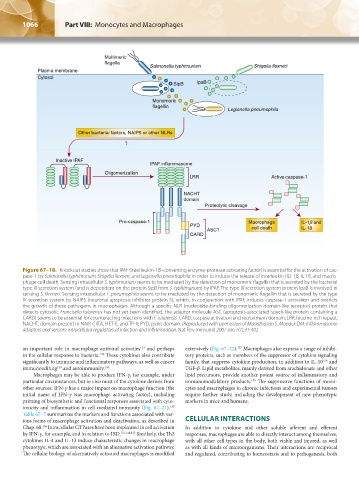
               Figure 67–18.  Knockout studies show that IPAF (interleukin-1β–converting enzyme-protease activating factor) is essential for the activation of cas-
               pase-1 by Salmonella typhimurium, Shigella flexneri, and Legionella pneumophila in order to induce the release of interleukin (IL)-1β, IL-18, and macro-
               phage cell death. Sensing intracellular S. typhimurium seems to be mediated by the detection of monomeric flagellin that is secreted by the bacterial
               type III secretion system (and is dependent on the protein SipB from S. typhimurium) by IPAF. The type III secretion system protein IpaB is involved in
               sensing S. flexneri. Sensing intracellular L. pneumophila seems to be mediated by the detection of monomeric flagellin that is secreted by the type
               IV secretion system by NAIP5 (neuronal apoptosis inhibitor protein 5), which, in conjunction with IPAF, induces caspase-1 activation and restricts
               the growth of these pathogens in macrophages. Although a specific NLR (nucleotide-binding oligomerization domain-like receptor) protein that
               detects cytosolic Francisella tularensis has not yet been identified, the adaptor molecule ASC (apoptosis-associated speck-like protein containing a
               CARD) seems to be essential for counteracting infections with F. tularensis. CARD, caspase activation and recruitment domain; LRR, leucine-rich repeat;
               NACHT, domain present in NAIP, CIITA, HET-E, and TP-1; PYD, pyrin domain. (Reproduced with permission of Mariathasan S, Monack DM: Inflammasome
               adaptors and sensors: intracellular regulators of infection and inflammation. Nat Rev Immunol 2007 Jan;7(1):31-40.)

               an important role in macrophage antiviral activities  and perhaps   extensively (Fig. 67–22).  Macrophages also express a range of inhibi-
                                                       131
                                                                                        137
               in the cellular response to bacteria.  These cytokines also contribute   tory proteins, such as members of the suppressor of cytokine signaling
                                         132
               significantly to immune and inflammatory pathways, as well as cancer   family, that suppress cytokine production, in addition to IL-10  and
                                                                                                                    138
               immunoediting  and autoimmunity. 134                   TGF-β. Lipid metabolites, mainly derived from arachidonate and other
                           133
                   Macrophages may be able to produce IFN-γ, for example, under   lipid precursors, provide another potent source of inflammatory and
               particular circumstances, but in vivo most of the cytokine derives from   immunomodulatory products.  The suppressive functions of mono-
                                                                                            139
               other sources. IFN-γ has a major impact on macrophage function (the   cytes and macrophages in chronic infections and experimental tumors
               initial name of IFN-γ was macrophage activating factor), including   require further study, including the development of new phenotypic
               priming of biosynthetic and functional responses associated with cyto-  markers in mice and humans.
               toxicity and inflammation in cell-mediated immunity (Fig. 67–21).
                                                                 135
               Table 67–7 summarizes the markers and functions associated with var-
               ious forms of macrophage activation and deactivation, as described in   CELLULAR INTERACTIONS
               Chap. 68.  Intracellular GTPases have been implicated in cell activation   In addition to cytokine and other soluble afferent and efferent
                      136
               by IFN-γ, for example, and in relation to IBD. 121,124,125  Similarly, the Th2   responses, macrophages are able to directly interact among themselves,
               cytokines IL-4 and IL-13 induce characteristic changes in macrophage   with all other cell types in the body, both viable and injured, as well
               phenotype, which are associated with an alternative activation pathway.   as with all kinds of microorganisms. Their interactions are reciprocal
               The cellular biology of alternatively activated macrophages is modified   and regulated, contributing to homeostasis and to pathogenesis, both


          Kaushansky_chapter 67_p1043-1074.indd   1066                                                                  9/21/15   10:43 AM

