


Page 702 - Textbook of Pathology, 6th Edition
P. 702
686 contributory role of other independent factors like cigarette
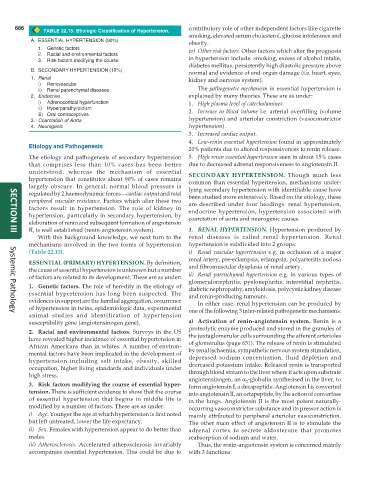
TABLE 22.15: Etiologic Classification of Hypertension.
smoking, elevated serum cholesterol, glucose intolerance and
A. ESSENTIAL HYPERTENSION (90%)
obesity.
1. Genetic factors iv) Other risk factors. Other factors which alter the prognosis
2. Racial and environmental factors in hypertension include: smoking, excess of alcohol intake,
3. Risk factors modifying the course
diabetes mellitus, persistently high diastolic pressure above
B. SECONDARY HYPERTENSION (10%)
normal and evidence of end-organ damage (i.e. heart, eyes,
1. Renal kidney and nervous system).
i) Renovascular
ii) Renal parenchymal diseases The pathogenetic mechanism in essential hypertension is
2. Endocrine explained by many theories. These are as under:
i) Adrenocortical hyperfunction 1. High plasma level of catecholamines.
ii) Hyperparathyroidism 2. Increase in blood volume i.e. arterial overfilling (volume
iii) Oral contraceptives
3. Coarctation of Aorta hypertension) and arteriolar constriction (vasoconstrictor
4. Neurogenic hypertension).
3. Increased cardiac output.
4. Low-renin essential hypertension found in approximately
Etiology and Pathogenesis 20% patients due to altered responsiveness to renin release.
The etiology and pathogenesis of secondary hypertension 5. High renin essential hypertension seen in about 15% cases
that comprises less than 10% cases has been better due to decreased adrenal responsiveness to angiotensin II.
understood, whereas the mechanism of essential SECONDARY HYPERTENSION. Though much less
hypertension that constitutes about 90% of cases remains common than essential hypertension, mechanisms under-
largely obscure. In general, normal blood pressure is lying secondary hypertension with identifiable cause have
regulated by 2 haemodynamic forces—cardiac output and total been studied more extensively. Based on the etiology, these
peripheral vascular resistance. Factors which alter these two are described under four headings: renal hypertension,
factors result in hypertension. The role of kidney in endocrine hypertension, hypertension associated with
hypertension, particularly in secondary hypertension, by coarctation of aorta and neurogenic causes.
elaboration of renin and subsequent formation of angiotensin
II, is well established (renin-angiotensin system). 1. RENAL HYPERTENSION. Hypertension produced by
SECTION III
With this background knowledge, we next turn to the renal diseases is called renal hypertension. Renal
mechanisms involved in the two forms of hypertension hypertension is subdivided into 2 groups:
(Table 22.15). i) Renal vascular hypertension e.g. in occlusion of a major
renal artery, pre-eclampsia, eclampsia, polyarteritis nodosa
ESSENTIAL (PRIMARY) HYPERTENSION. By definition, and fibromuscular dysplasia of renal artery.
the cause of essential hypertension is unknown but a number
of factors are related to its development. These are as under: ii) Renal parenchymal hypertension e.g. in various types of
glomerulonephritis, pyelonephritis, interstitial nephritis,
1. Genetic factors. The role of heredity in the etiology of diabetic nephropathy, amyloidosis, polycystic kidney disease
essential hypertension has long been suspected. The and renin-producing tumours.
evidences in support are the familial aggregation, occurrence In either case, renal hypertension can be produced by
of hypertension in twins, epidemiologic data, experimental one of the following 3 inter-related pathogenetic mechanisms:
animal studies and identification of hypertension
Systemic Pathology
susceptibility gene (angiotensinogen gene). a) Activation of renin-angiotensin system. Renin is a
proteolytic enzyme produced and stored in the granules of
2. Racial and environmental factors. Surveys in the US the juxtaglomerular cells surrounding the afferent arterioles
have revealed higher incidence of essential hypertension in of glomerulus (page 651). The release of renin is stimulated
African Americans than in whites. A number of environ- by renal ischaemia, sympathetic nervous system stimulation,
mental factors have been implicated in the development of depressed sodium concentration, fluid depletion and
hypertension including salt intake, obesity, skilled decreased potassium intake. Released renin is transported
occupation, higher living standards and individuals under through blood stream to the liver where it acts upon substrate
high stress. angiotensinogen, an α -globulin synthesised in the liver, to
2
3. Risk factors modifying the course of essential hyper- form angiotensin I, a decapeptide. Angiotensin I is converted
tension. There is sufficient evidence to show that the course into angiotensin II, an octapeptide, by the action of convertase
of essential hypertension that begins in middle life is in the lungs. Angiotensin II is the most potent naturally-
modified by a number of factors. These are as under: occurring vasoconstrictor substance and its pressor action is
i) Age. Younger the age at which hypertension is first noted mainly attributed to peripheral arteriolar vasoconstriction.
but left untreated, lower the life expectancy. The other main effect of angiotensin II is to stimulate the
ii) Sex. Females with hypertension appear to do better than adrenal cortex to secrete aldosterone that promotes
males. reabsorption of sodium and water.
iii) Atherosclerosis. Accelerated atherosclerosis invariably Thus, the renin-angiotensin system is concerned mainly
accompanies essential hypertension. This could be due to with 3 functions:

