


Page 703 - Textbook of Pathology, 6th Edition
P. 703
2. ENDOCRINE HYPERTENSION. A number of hormonal      687
                                                               secretions may produce secondary hypertension. These are:
                                                               i) Adrenal gland—e.g. in primary aldosteronism, Cushing’s
                                                               syndrome, adrenal virilism and pheochromocytoma.
                                                               ii) Parathyroid gland—e.g. hypercalcaemia in hyperpara-
                                                               thyroidism.
                                                               iii) Oral contraceptives—Oestrogen component in the oral
                                                               contraceptives stimulates hepatic synthesis of renin substrate.

                                                               3. COARCTATION OF AORTA. Coarctation of the aorta
                                                               causes systolic hypertension in the upper part of the body
                                                               due to constriction itself (Chapter 15). Diastolic hypertension
                                                               results from changes in circulation.
                                                               4. NEUROGENIC.  Psychogenic, polyneuritis, increased
                                                               intracranial pressure and section of spinal cord are all
                                                               uncommon causes of secondary hypertension.

                                                               EFFECTS OF HYPERTENSION

                                                               Systemic hypertension causes major effects in three main
                                                               organs—heart and its blood vessels, nervous system, and
                                                               kidneys. The renal effects in the form of benign and malignant
                                                               nephrosclerosis are discussed below, whereas hypertensive
                                                               effects on other organs are described elsewhere in the
                                                               respective chapters. An important and early clinical marker
                                                               for renal injury from hypertension and risk factor for  CHAPTER 22
                                                               cardiovascular disease is macroalbuminuria (i.e. albuminuria
                                                               > 150 mg/day or random urine albumin/creatinine ratio of
                                                               >300 mg/gm creatinine), or microalbuminuria estimated by
                                                               radioimmunoassay (i.e. microalbumin 30-300 mg/day or
                                                               random urine microalbumin/creatinine ratio of
                                                               30-300 mg/gm creatinine).
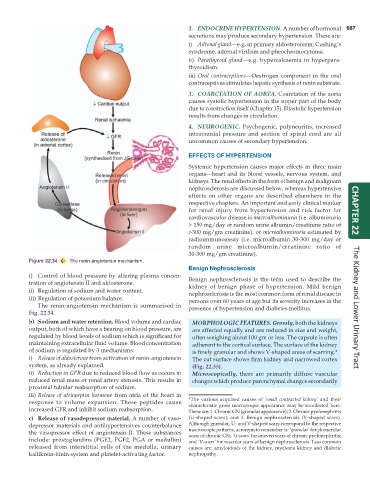
           Figure 22.34  The renin-angiotensin mechanism.
                                                               Benign Nephrosclerosis
           i) Control of blood pressure by altering plasma concen-  Benign nephrosclerosis is the term used to describe the
           tration of angiotensin II and aldosterone.          kidney of benign phase of hypertension. Mild benign
           ii) Regulation of sodium and water content.         nephrosclerosis is the most common form of renal disease in
           iii) Regulation of potassium balance.               persons over 60 years of age but its severity increases in the
              The renin-angiotensin mechanism is summarised in  presence of hypertension and diabetes mellitus.       The Kidney and Lower Urinary Tract
           Fig. 22.34.
           b) Sodium and water retention. Blood volume and cardiac  MORPHOLOGIC FEATURES. Grossly, both the kidneys
           output, both of which have a bearing on blood pressure, are  are affected equally and are reduced in size and weight,
           regulated by blood levels of sodium which is significant for  often weighing about 100 gm or less. The capsule is often
           maintaining extracellular fluid volume. Blood concentration  adherent to the cortical surface. The surface of the kidney
           of sodium is regulated by 3 mechanisms:               is finely granular and shows V-shaped areas of scarring.*
           i) Release of aldosterone from activation of renin-angiotensin  The cut surface shows firm kidney and narrowed cortex
           system, as already explained.                         (Fig. 22.35).
           ii) Reduction in GFR due to reduced blood flow as occurs in  Microscopically, there are primarily diffuse vascular
           reduced renal mass or renal artery stenosis. This results in  changes which produce parenchymal changes secondarily
           proximal tubular reabsorption of sodium.
           iii) Release of atriopeptin hormone from atria of the heart in
           response to volume expansion. These peptides cause  *The various acquired causes of  ‘small contracted kidney’ and their
           increased GFR and inhibit sodium reabsorption.      characteristic gross macroscopic appearance may be recollected here.
                                                               These are: 1. Chronic GN (granular appearance); 2. Chronic pyelonephritis
           c) Release of vasodepressor material. A number of vaso-  (U-shaped scars); and 3. Benign nephrosclerosis (V-shaped scars).
           depressor materials and antihypertensives counterbalance  Although granular, U- and V-shaped scars correspond to the respective
           the vasopressor effect of angiotensin II. These substances  macroscopic patterns, acronym to remember is: ‘granular’ for glomerular
                                                               scars of chronic GN; ‘U-scars’ for uneven scars of chronic pyelonephritis;
           include: prostaglandins (PGE2, PGF2, PGA or medullin)  and ‘V-scars’ for vascular scars of benign nephrosclerosis. Less common
           released from interstitial cells of the medulla, urinary  causes are: amyloidosis of the kidney, myeloma kidney and diabetic
           kallikrein-kinin system and platelet-activating factor.  nephropathy.

