


Page 704 - Textbook of Pathology, 6th Edition
P. 704
688


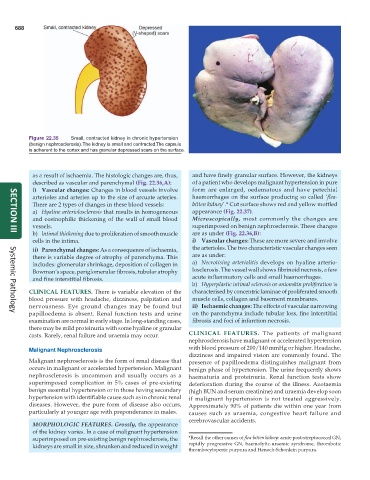
           Figure 22.35  Small, contracted kidney in chronic hypertension
           (benign nephrosclerosis). The kidney is small and contracted. The capsule
           is adherent to the cortex and has granular depressed scars on the surface.


            as a result of ischaemia. The histologic changes are, thus,  and have finely granular surface. However, the kidneys
            described as vascular and parenchymal (Fig. 22.36,A):  of a patient who develops malignant hypertension in pure
            i) Vascular changes: Changes in blood vessels involve  form are enlarged, oedematous and have petechial
            arterioles and arteries up to the size of arcuate arteries.  haemorrhages on the surface producing so called ‘flea-
            There are 2 types of changes in these blood vessels:  bitten kidney’.* Cut surface shows red and yellow mottled
            a) Hyaline arteriolosclerosis that results in homogeneous  appearance (Fig. 22.37).
            and eosinophilic thickening of the wall of small blood  Microscopically, most commonly the changes are
            vessels.                                             superimposed on benign nephrosclerosis. These changes
            b) lntimal thickening due to proliferation of smooth muscle  are as under (Fig. 22.36,B):
     SECTION III
            cells in the intima.                                 i) Vascular changes: These are more severe and involve
            ii) Parenchymal changes: As a consequence of ischaemia,  the arterioles. The two characteristic vascular changes seen
            there is variable degree of atrophy of parenchyma. This  are as under:
            includes: glomerular shrinkage, deposition of collagen in  a) Necrotising arteriolitis develops on hyaline arterio-
            Bowman’s space, periglomerular fibrosis, tubular atrophy  losclerosis. The vessel wall shows fibrinoid necrosis, a few
            and fine interstitial fibrosis.                      acute inflammatory cells and small haemorrhages.
                                                                 b) Hyperplastic intimal sclerosis or onionskin proliferation is
           CLINICAL FEATURES. There is variable elevation of the  characterised by concentric laminae of proliferated smooth
           blood pressure with headache, dizziness, palpitation and  muscle cells, collagen and basement membranes.
           nervousness. Eye ground changes may be found but      ii) Ischaemic changes: The effects of vascular narrowing
           papilloedema is absent. Renal function tests and urine  on the parenchyma include tubular loss, fine interstitial
     Systemic Pathology
           examination are normal in early stage. In long-standing cases,  fibrosis and foci of infarction necrosis.
           there may be mild proteinuria with some hyaline or granular
           casts. Rarely, renal failure and uraemia may occur.  CLINICAL FEATURES.  The patients of malignant
                                                               nephrosclerosis have malignant or accelerated hypertension
           Malignant Nephrosclerosis                           with blood pressure of 200/140 mmHg or higher. Headache,
                                                               dizziness and impaired vision are commonly found. The
           Malignant nephrosclerosis is the form of renal disease that  presence of papilloedema distinguishes malignant from
           occurs in malignant or accelerated hypertension. Malignant  benign phase of hypertension. The urine frequently shows
           nephrosclerosis is uncommon and usually occurs as a  haematuria and proteinuria. Renal function tests show
           superimposed complication in 5% cases of pre-existing  deterioration during the course of the illness. Azotaemia
           benign essential hypertension or in those having secondary  (high BUN and serum creatinine) and uraemia develop soon
           hypertension with identifiable cause such as in chronic renal  if malignant hypertension is not treated aggressively.
           diseases. However, the pure form of disease also occurs,  Approximately 90% of patients die within one year from
           particularly at younger age with preponderance in males.  causes such as uraemia, congestive heart failure and
                                                               cerebrovascular accidents.
            MORPHOLOGIC FEATURES. Grossly, the appearance
            of the kidney varies. In a case of malignant hypertension
            superimposed on pre-existing benign nephrosclerosis, the  *Recall the other causes of flea-bitten kidney: acute post-streptococcal GN,
            kidneys are small in size, shrunken and reduced in weight  rapidly progressive GN, haemolytic-uraemic syndrome, thrombotic
                                                               thrombocytopenic purpura and Henoch-Schonlein purpura.

