


Page 792 - Textbook of Pathology, 6th Edition
P. 792
776


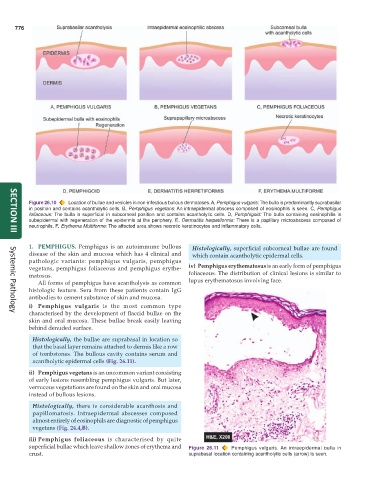
           Figure 26.10  Location of bullae and vesicles in non-infectious bullous dermatoses. A, Pemphigus vulgaris: The bulla is predominantly suprabasilar
           in position and contains acantholytic cells. B, Pemphigus vegetans: An intraepidermal abscess composed of eosinophils is seen. C, Pemphigus
           foliaceous: The bulla is superficial in subcorneal position and contains acantholytic cells. D, Pemphigoid: The bulla containing eosinophilis is
           subepidermal with regeneration of the epidermis at the periphery. E, Dermatitis herpetiformis: There is a papillary microabscess composed of
           neutrophils. F, Erythema Multiforme: The affected area shows necrotic keratinocytes and inflammatory cells.
     SECTION III
           1. PEMPHIGUS. Pemphigus is an autoimmune bullous      Histologically, superficial subcorneal bullae are found
           disease of the skin and mucosa which has 4 clinical and  which contain acantholytic epidermal cells.
           pathologic variants: pemphigus vulgaris, pemphigus
           vegetans, pemphigus foliaceous and pemphigus erythe-  iv) Pemphigus erythematosus is an early form of pemphigus
           matosus.                                            foliaceous. The distribution of clinical lesions is similar to
              All forms of pemphigus have acantholysis as common  lupus erythematosus involving face.
           histologic feature. Sera from these patients contain IgG
           antibodies to cement substance of skin and mucosa.
           i) Pemphigus vulgaris is the most common type
           characterised by the development of flaccid bullae on the
     Systemic Pathology
           skin and oral mucosa. These bullae break easily leaving
           behind denuded surface.
            Histologically, the bullae are suprabasal in location so
            that the basal layer remains attached to dermis like a row
            of tombstones. The bullous cavity contains serum and
            acantholytic epidermal cells (Fig. 26.11).
           ii) Pemphigus vegetans is an uncommon variant consisting
           of early lesions resembling pemphigus vulgaris. But later,
           verrucous vegetations are found on the skin and oral mucosa
           instead of bullous lesions.
            Histologically, there is considerable acanthosis and
            papillomatosis. Intraepidermal abscesses composed
            almost entirely of eosinophils are diagnostic of pemphigus
            vegetans (Fig. 24.4,B).
           iii) Pemphigus foliaceous is characterised by quite
           superficial bullae which leave shallow zones of erythema and  Figure 26.11  Pemphigus vulgaris. An intraepidermal bulla in
           crust.                                              suprabasal location containing acantholytic cells (arrow) is seen.

