


Page 796 - Textbook of Pathology, 6th Edition
P. 796
780 from elsewhere in the body but are cellular migrants to the
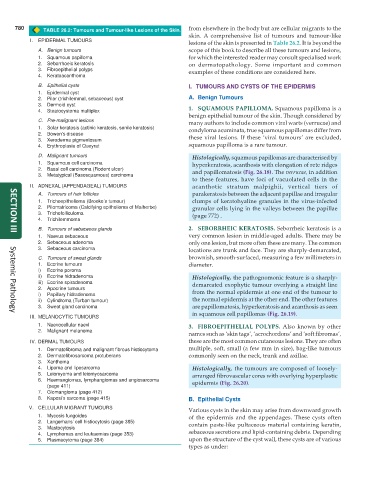
TABLE 26.2: Tumours and Tumour-like Lesions of the Skin.
skin. A comprehensive list of tumours and tumour-like
I. EPIDERMAL TUMOURS
lesions of the skin is presented in Table 26.2. It is beyond the
A. Benign tumours scope of this book to describe all these tumours and lesions,
1. Squamous papilloma for which the interested reader may consult specialised work
2. Seborrhoeic keratosis on dermatopathology. Some important and common
3. Fibroepithelial polyps examples of these conditions are considered here.
4. Keratoacanthoma
B. Epithelial cysts I. TUMOURS AND CYSTS OF THE EPIDERMIS
1. Epidermal cyst
2. Pilar (trichilemmal, sebaceous) cyst A. Benign Tumours
3. Dermoid cyst 1. SQUAMOUS PAPILLOMA. Squamous papilloma is a
4. Steatocystoma multiplex
benign epithelial tumour of the skin. Though considered by
C. Pre-malignant lesions many authors to include common viral warts (verrucae) and
1. Solar keratosis (actinic keratosis, senile keratosis) condyloma acuminata, true squamous papillomas differ from
2. Bowen’s disease these viral lesions. If these ‘viral tumours’ are excluded,
3. Xeroderma pigmentosum
4. Erythroplasia of Queyrat squamous papilloma is a rare tumour.
D. Malignant tumours Histologically, squamous papillomas are characterised by
1. Squamous cell carcinoma hyperkeratosis, acanthosis with elongation of rete ridges
2. Basal cell carcinoma (Rodent ulcer) and papillomatosis (Fig. 26.18). The verrucae, in addition
3. Metatypical (Basosquamous) carcinoma
to these features, have foci of vacuolated cells in the
II. ADNEXAL (APPENDAGEAL) TUMOURS acanthotic stratum malpighii, vertical tiers of
A. Tumours of hair follicles parakeratosis between the adjacent papillae and irregular
1. Trichoepithelioma (Brooke’s tumour) clumps of keratohyaline granules in the virus-infected
2. Pilomatricoma (Calcifying epithelioma of Malherbe) granular cells lying in the valleys between the papillae
3. Trichofolliculoma (page 772) .
4. Trichilemmoma
B. Tumours of sebaceous glands 2. SEBORRHEIC KERATOSIS. Seborrheic keratosis is a
SECTION III
1. Naevus sebaceous very common lesion in middle-aged adults. There may be
2. Sebaceous adenoma only one lesion, but more often these are many. The common
3. Sebaceous carcinoma locations are trunk and face. They are sharply-demarcated,
C. Tumours of sweat glands brownish, smooth-surfaced, measuring a few millimeters in
1. Eccrine tumours diameter.
i) Eccrine poroma
ii) Eccrine hidradenoma Histologically, the pathognomonic feature is a sharply-
iii) Eccrine spiradenoma demarcated exophytic tumour overlying a straight line
2. Apocrine tumours from the normal epidermis at one end of the tumour to
i) Papillary hidradenoma
ii) Cylindroma (Turban tumour) the normal epidermis at the other end. The other features
3. Sweat gland carcinoma are papillomatosis, hyperkeratosis and acanthosis as seen
in squamous cell papillomas (Fig. 26.19).
Systemic Pathology
III. MELANOCYTIC TUMOURS
1. Naevocellular naevi 3. FIBROEPITHELIAL POLYPS. Also known by other
2. Malignant melanoma
names such as ‘skin tags’, ‘acrochordons’ and ‘soft fibromas’,
IV. DERMAL TUMOURS these are the most common cutaneous lesions. They are often
1. Dermatofibroma and malignant fibrous histiocytoma multiple, soft, small (a few mm in size), bag-like tumours
2. Dermatofibrosarcoma protuberans commonly seen on the neck, trunk and axillae.
3. Xanthoma
4. Lipoma and liposarcoma Histologically, the tumours are composed of loosely-
5. Leiomyoma and leiomyosarcoma arranged fibrovascular cores with overlying hyperplastic
6. Haemangiomas, lymphangiomas and angiosarcoma epidermis (Fig. 26.20).
(page 411)
7. Glomangioma (page 412)
8. Kaposi’s sarcoma (page 415) B. Epithelial Cysts
V. CELLULAR MIGRANT TUMOURS
Various cysts in the skin may arise from downward growth
1. Mycosis fungoides of the epidermis and the appendages. These cysts often
2. Langerhans’ cell histiocytosis (page 385) contain paste-like pultaceous material containing keratin,
3. Mastocytosis
4. Lymphomas and leukaemias (page 353) sebaceous secretions and lipid-containing debris. Depending
5. Plasmacytoma (page 384) upon the structure of the cyst wall, these cysts are of various
types as under:

