


Page 864 - Textbook of Pathology, 6th Edition
P. 864
848


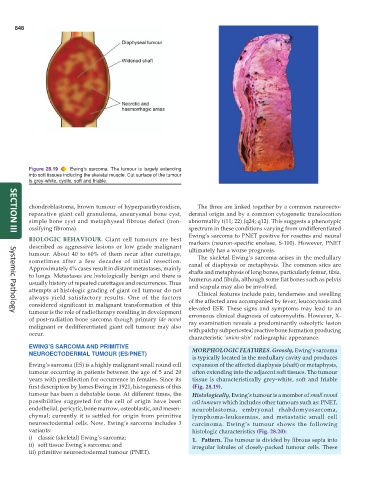
           Figure 28.19  Ewing’s sarcoma. The tumour is largely extending
           into soft tissues including the skeletal muscle. Cut surface of the tumour
           is grey-white, cystic, soft and friable.


           chondroblastoma, brown tumour of hyperparathyroidism,  The three are linked together by a common neuroecto-
           reparative giant cell granuloma, aneurysmal bone cyst,  dermal origin and by a common cytogenetic translocation
           simple bone cyst and metaphyseal fibrous defect (non-  abnormality t(11; 22) (q24; q12). This suggests a phenotypic
           ossifying fibroma).                                 spectrum in these conditions varying from undifferentiated
                                                               Ewing’s sarcoma to PNET positive for rosettes and neural
     SECTION III
           BIOLOGIC BEHAVIOUR.  Giant cell tumours are best    markers (neuron-specific enolase, S-100). However, PNET
           described as aggressive lesions or low grade malignant  ultimately has a worse prognosis.
           tumour. About 40 to 60% of them recur after curettage,  The skeletal Ewing’s sarcoma arises in the medullary
           sometimes after a few decades of initial resection.  canal of diaphysis or metaphysis. The common sites are
           Approximately 4% cases result in distant metastases, mainly  shafts and metaphysis of long bones, particularly femur, tibia,
           to lungs. Metastases are histologically benign and there is  humerus and fibula, although some flat bones such as pelvis
           usually history of repeated curettages and recurrences. Thus  and scapula may also be involved.
           attempts at histologic grading of giant cell tumour do not  Clinical features include pain, tenderness and swelling
           always yield satisfactory results. One of the factors  of the affected area accompanied by fever, leucocytosis and
           considered significant in malignant transformation of this  elevated ESR. These signs and symptoms may lead to an
           tumour is the role of radiotherapy resulting in development  erroneous clinical diagnosis of osteomyelitis. However, X-
     Systemic Pathology
           of post-radiation bone sarcoma though primary (de novo)  ray examination reveals a predominantly osteolytic lesion
           malignant or dedifferentiated giant cell tumour may also  with patchy subperiosteal reactive bone formation producing
           occur.
                                                               characteristic ‘onion-skin’ radiographic appearance.
           EWING’S SARCOMA AND PRIMITIVE                         MORPHOLOGIC FEATURES. Grossly, Ewing’s sarcoma
           NEUROECTODERMAL TUMOUR (ES/PNET)
                                                                 is typically located in the medullary cavity and produces
           Ewing’s sarcoma (ES) is a highly malignant small round cell  expansion of the affected diaphysis (shaft) or metaphysis,
           tumour occurring in patients between the age of 5 and 20  often extending into the adjacent soft tissues. The tumour
           years with predilection for occurrence in females. Since its  tissue is characteristically grey-white, soft and friable
           first description by James Ewing in 1921, histogenesis of this  (Fig. 28.19).
           tumour has been a debatable issue. At different times, the  Histologically, Ewing’s tumour is a member of small round
           possibilities suggested for the cell of origin have been  cell tumours which includes other tumours such as: PNET,
           endothelial, pericytic, bone marrow, osteoblastic, and mesen-  neuroblastoma, embryonal rhabdomyosarcoma,
           chymal; currently it is settled for origin from primitive  lymphoma-leukaemias, and metastatic small cell
           neuroectodermal cells. Now, Ewing’s sarcoma includes 3  carcinoma. Ewing’s tumour shows the following
           variants:                                             histologic characteristics (Fig. 28.20):
           i) classic (skeletal) Ewing’s sarcoma;                1. Pattern. The tumour is divided by fibrous septa into
           ii) soft tissue Ewing’s sarcoma; and                  irregular lobules of closely-packed tumour cells. These
           iii) primitive neuroectodermal tumour (PNET).

