


Page 119 - 9780077418427.pdf
P. 119
/Users/user-f465/Desktop
          tiL12214_ch04_085-114.indd Page 96  9/1/10  9:37 PM user-f465
          tiL12214_ch04_085-114.indd Page 96  9/1/10  9:37 PM user-f465                                                 /Users/user-f465/Desktop


                    TABLE 4.2

                    The specific heat of selected substances
                    Substance            Specific Heat (cal/gC° or kcal/kgC°)
                    Air                             0.17
                    Aluminum                        0.22
                    Concrete                        0.16
                    Copper                          0.093
                    Glass (average)                 0.160
                    Gold                            0.03
                                                                                                  Transmission of
                    Ice                             0.500                                         increased kinetic energy
                    Iron                            0.11
                    Lead                            0.0305
                    Mercury                         0.033
                    Seawater                        0.93
                    Silver                          0.056
                    Soil (average)                  0.200
                    Steam                           0.480
                    Water                           1.00

                   Note: To convert to specific heat in J/kgC°, multiply each value by 4,184. Also note
                   that 1 cal/gC° = 1 kcal/kgC°.

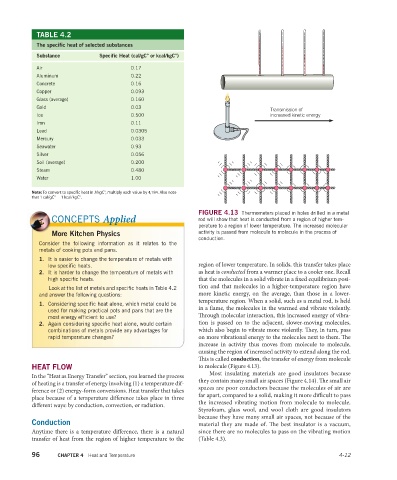
                                                                          FIGURE 4.13  Thermometers placed in holes drilled in a metal
                         CONCEPTS Applied                                 rod will show that heat is conducted from a region of higher tem-
                                                                          perature to a region of lower temperature. The increased molecular
                         More Kitchen Physics                             activity is passed from molecule to molecule in the process of
                                                                          conduction.
                     Consider the following information as it relates to the
                     metals of cooking pots and pans.
                     1.  It is easier to change the temperature of metals with
                        low specific heats.                               region of lower temperature. In solids, this transfer takes place
                     2.  It is harder to change the temperature of metals with   as heat is conducted from a warmer place to a cooler one. Recall

                        high specific heats.                              that the molecules in a solid vibrate in a fixed equilibrium posi-
                                                                          tion and that molecules in a higher-temperature region have
                        Look at the list of metals and specific heats in Table 4.2
                     and answer the following questions:                  more kinetic energy, on the average, than those in a lower-
                                                                          temperature region. When a solid, such as a metal rod, is held
                     1.  Considering specific heat alone, which metal could be

                                                                          in a flame, the molecules in the warmed end vibrate violently.
                        used for making practical pots and pans that are the

                                                                          Through molecular interaction, this increased energy of vibra-
                        most energy efficient to use?
                     2.  Again considering specific heat alone, would certain   tion is passed on to the adjacent, slower-moving molecules,

                          combinations of metals provide any advantages for   which also begin to vibrate more violently. They, in turn, pass
                        rapid temperature changes?                        on more vibrational energy to the molecules next to them. Th e
                                                                          increase in activity thus moves from molecule to molecule,
                                                                          causing the region of increased activity to extend along the rod.

                                                                          This is called conduction, the transfer of energy from molecule
                   HEAT FLOW                                              to molecule (Figure 4.13).
                                                                             Most insulating materials are good insulators because
                   In the “Heat as Energy Transfer” section, you learned the process

                   of heating is a transfer of energy involving (1) a temperature dif-  they contain many small air spaces (Figure 4.14). The small air
                   ference or (2) energy-form conversions. Heat transfer that takes   spaces are poor conductors because the molecules of air are

                   place because of a temperature difference takes place in three   far apart, compared to a solid, making it more diffi  cult to pass

                   different ways: by conduction, convection, or radiation.  the increased vibrating motion from molecule to  molecule.
                                                                          Styrofoam, glass wool, and wool cloth are good insulators
                                                                          because they have many small air spaces, not because of the
                   Conduction                                             material they are made of. The best insulator is a vacuum,

                   Anytime there is a temperature difference, there is a natural   since there are no molecules to pass on the vibrating motion

                   transfer of heat from the region of higher temperature to the   (Table 4.3).
                   96      CHAPTER 4  Heat and Temperature                                                              4-12

