


Page 172 - The Book of Caterpillars: A Life-Size Guide to Six Hundred Species From Around the World
P. 172
BUTTERFLY CATERPILLARS
FAMILY Lycaenidae
DISTRIBUTION Western North America, from British Columbia and Montana to
southern California and New Mexico
HABITAT Forest openings, shrub-steppe, subalpine meadows, and roadsides
HOST PLANTS Lupine (Lupinus spp.)
NOTE Caterpillar that is dormant for up to nine months
CONSERVATION STATUS Not evaluated, but usually common, although some subspecies
are threatened or endangered
ADULT WINGSPAN
1⁄–1⅜ in (30–35 mm)
CATERPILLAR LENGTH
⅜–½ in (10–12 mm)
PLEBEJUS ICARIOIDES
BOISDUVAL BLUE
170
(BOISDUVAL, 1852)
Boisduval Blue caterpillars hatch from pale, greenish-white
eggs laid on lupines by the female butterfly some five to seven
days earlier. First instar larvae feed for 14 days before molting
to second instars. In most areas, second instars enter dormancy
Actual size
or diapause in midsummer and rest at the base of host plants.
The larvae remain in this state through the fall and the winter,
and then resume feeding the following spring on new plant
growth. They feed on leaves initially, then focus on flowers and
fruits. From this point, larval development to the fourth and
final instar is rapid, with pupation on the host plant, in debris,
or under stones occurring after 40 days. The pretty blue adult
butterflies eclose in early April.
Caterpillars of this species are tended by ants, which provide
protection from natural enemies such as wasps and predatory
bugs. In turn, the caterpillars secrete a sugary substance on
which the ants feed. Camouflage, diurnal concealment, and ant
attendance are likely important features of defense.
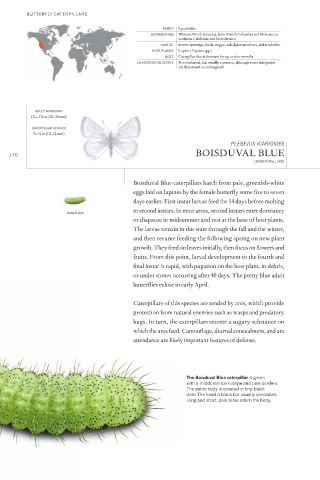
The Boisduval Blue caterpillar is green
with a middorsal dark stripe and pale borders.
The entire body is covered in tiny, black
dots. The head is black but usually concealed.
Long and short, pale setae adorn the body.

