


Page 393 - Python Data Science Handbook
P. 393
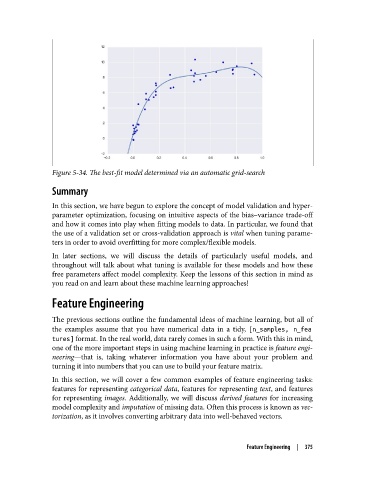
Figure 5-34. The best-fit model determined via an automatic grid-search

               Summary
               In this section, we have begun to explore the concept of model validation and hyper‐
               parameter optimization, focusing on intuitive aspects of the bias–variance trade-off
               and how it comes into play when fitting models to data. In particular, we found that
               the use of a validation set or cross-validation approach is vital when tuning parame‐
               ters in order to avoid overfitting for more complex/flexible models.
               In later sections, we will discuss the details of particularly useful models, and
               throughout will talk about what tuning is available for these models and how these
               free parameters affect model complexity. Keep the lessons of this section in mind as
               you read on and learn about these machine learning approaches!

               Feature Engineering

               The previous sections outline the fundamental ideas of machine learning, but all of
               the examples assume that you have numerical data in a tidy, [n_samples, n_fea
               tures] format. In the real world, data rarely comes in such a form. With this in mind,
               one of the more important steps in using machine learning in practice is feature engi‐
               neering—that is, taking whatever information you have about your problem and
               turning it into numbers that you can use to build your feature matrix.
               In this section, we will cover a few common examples of feature engineering tasks:
               features for representing categorical data, features for representing text, and features
               for representing images. Additionally, we will discuss derived features  for increasing
               model complexity and imputation of missing data. Often this process is known as vec‐
               torization, as it involves converting arbitrary data into well-behaved vectors.


                                                                     Feature Engineering  |  375

