


Page 457 - Python Data Science Handbook
P. 457
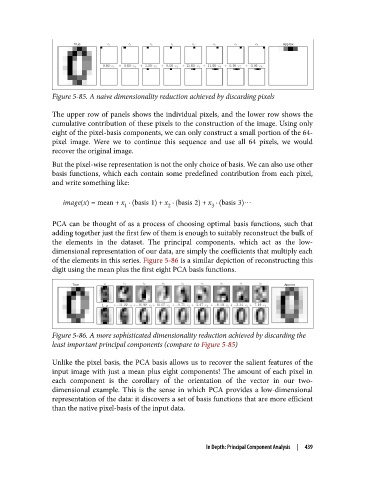
Figure 5-85. A naive dimensionality reduction achieved by discarding pixels

               The upper row of panels shows the individual pixels, and the lower row shows the
               cumulative contribution of these pixels to the construction of the image. Using only
               eight of the pixel-basis components, we can only construct a small portion of the 64-
               pixel image. Were we to continue this sequence and use all 64 pixels, we would
               recover the original image.
               But the pixel-wise representation is not the only choice of basis. We can also use other
               basis functions, which each contain some predefined contribution from each pixel,
               and write something like:

                  image x = mean + x · basis 1 + x · basis 2 + x · basis 3 ٵ
                                                           3
                                               2
                                   1
               PCA can be thought of as a process of choosing optimal basis functions, such that
               adding together just the first few of them is enough to suitably reconstruct the bulk of
               the elements in the dataset. The principal components, which act as the low-
               dimensional representation of our data, are simply the coefficients that multiply each
               of the elements in this series. Figure 5-86 is a similar depiction of reconstructing this
               digit using the mean plus the first eight PCA basis functions.


               Figure 5-86. A more sophisticated dimensionality reduction achieved by discarding the
               least important principal components (compare to Figure 5-85)


               Unlike the pixel basis, the PCA basis allows us to recover the salient features of the
               input image with just a mean plus eight components! The amount of each pixel in
               each component is the corollary of the orientation of the vector in our two-
               dimensional example. This is the sense in which PCA provides a low-dimensional
               representation of the data: it discovers a set of basis functions that are more efficient
               than the native pixel-basis of the input data.


                                                          In Depth: Principal Component Analysis  |  439

